Choosing the right fence is about more than marking the edge of your property. A well-planned fence can improve privacy, increase security, define outdoor spaces, complement the architecture of your home, and make your backyard feel more complete.
Before choosing a fence, homeowners should think about what they need most from the project. Some properties need more privacy from neighboring homes, while others need stronger perimeter security, better protection around a pool, or a more attractive boundary that improves the overall appearance of the yard.
The best residential fence should balance function, durability, maintenance, budget, and design.
Start With the Main Purpose of Your Fence
The first step is deciding what problem the fence needs to solve.
If privacy is the priority, you may want a taller fence with limited gaps between panels. If security is more important, durability, height, gate design, and visibility around entry points become more important. If your main goal is improving the appearance of the property, the material, color, pattern, and relationship with the home may influence the decision more than height.
Many homeowners need a combination of several functions.
A backyard fence may need to provide privacy from neighbors, keep children or pets inside the yard, create a safer pool area, and still coordinate with landscaping and outdoor living spaces.
Defining these priorities before choosing a material makes the selection process much easier.
Choosing a Fence for Privacy
A privacy fence is designed to reduce visibility into the property and create a more enclosed outdoor environment.
This can be especially useful around patios, pools, outdoor kitchens, seating areas, and backyards located close to neighboring homes.
Privacy fences usually use solid or closely spaced panels that limit sightlines. The exact level of privacy depends on the height, material, spacing, and layout.
Common privacy fence options include:
- Wood fencing
- Composite fencing
- Vinyl fencing
- Masonry walls
- Metal fencing with privacy panels
- Horizontal slat fences
Before choosing a fully solid design, consider airflow and how the fence will affect the feeling of the backyard. A completely enclosed space may provide excellent privacy but can also feel smaller depending on the property.
Choosing a Fence for Security
A security fence should help control access to the property while creating a clear physical boundary.
Height, strength, visibility, gate construction, and placement all matter.
A fence designed for security may use metal, masonry, reinforced wood, or another durable material. The best option depends on the property and the level of protection needed.
Security fencing should also be planned around entry points. A strong perimeter fence is less effective if gates are poorly positioned or easy to access.
Consider:
- Gate location
- Locking hardware
- Fence height
- Strength of posts and panels
- Visibility near entrances
- Lighting
- Access from alleys or side yards
Security does not always require making a property look closed off. Some fence designs provide a strong boundary while preserving visibility and a more open appearance.
Choosing a Fence for Style
A fence can become one of the most visible design elements around a home.
Because of this, the fence should complement the exterior architecture rather than look like an unrelated addition.
Consider the style of the house, exterior colors, roof, landscaping, patio materials, and other permanent outdoor features.
For example, modern homes often work well with clean horizontal lines, simple metal panels, or contemporary composite fencing. Traditional properties may look better with vertical wood fencing or decorative metal designs, while southwestern homes can pair well with masonry, stucco finishes, or earth-toned materials.
The goal is to make the fence feel like part of the property rather than simply a barrier.
Wood Fencing
Wood remains one of the most popular residential fencing materials because it offers warmth, versatility, and many design options.
Wood fences can be built with vertical boards, horizontal slats, decorative tops, or custom spacing.
They can provide strong privacy when panels are installed closely together and can also be stained or painted to coordinate with the home.
However, wood requires ongoing maintenance. Sun exposure, moisture, temperature changes, and normal aging can affect the material over time.
Homeowners considering wood fencing should be comfortable with periodic staining, sealing, painting, or repairs.
Metal Fencing
Metal fencing can provide durability, security, and a clean appearance.
Common options include ornamental iron-style fencing, steel, and aluminum systems.
Metal fences are often used around front yards, pools, side yards, and properties where homeowners want security without completely blocking visibility.
They can also be combined with masonry columns or walls to create a more substantial design.
Metal fencing may not provide much privacy on its own, but privacy screens or other materials can sometimes be incorporated depending on the design.
Composite Fencing
Composite fencing is designed to provide the appearance of wood with reduced routine maintenance.
It can be a good option for homeowners who want a clean, consistent look without dealing with the same maintenance requirements as traditional wood.
Composite fence systems are available in different colors and styles and can provide strong privacy.
They may have a higher initial cost than some basic fencing options, but homeowners often consider the long-term maintenance requirements when comparing materials.
Product quality can vary, so it is important to choose a system designed for exterior use and suitable for local conditions.
Vinyl Fencing
Vinyl fencing is another low-maintenance option for residential properties.
It can provide excellent privacy and is available in several styles, including solid panels and decorative designs.
Vinyl does not require painting or staining, and routine cleaning is usually relatively simple.
However, appearance, durability, and heat performance can vary by product. In areas with strong sun exposure, product quality becomes especially important.
Homeowners should consider how the material performs under outdoor conditions rather than choosing based only on price.
Masonry Walls and Fences
Masonry can provide a strong combination of privacy, security, durability, and noise reduction.
Options may include concrete block, stone, stucco-finished walls, or combinations of masonry and metal.
Masonry works particularly well when homeowners want a permanent boundary and a more substantial appearance.
It can also coordinate effectively with outdoor kitchens, retaining walls, patios, and other hardscape elements.
Because masonry structures are heavier and more permanent, planning, foundation work, drainage, and local requirements become important considerations.
Horizontal vs. Vertical Fence Design
The direction of fence boards can significantly change the appearance of a backyard.
Horizontal fencing creates a modern, streamlined look and can visually make a space feel wider. It is commonly used with wood and composite materials.
Vertical fencing has a more traditional appearance and works well across many architectural styles.
The decision should be based on more than aesthetics. Structural design, material movement, spacing, and installation methods also matter.
A fence should be engineered and installed appropriately for the chosen orientation.
How Tall Should a Privacy Fence Be?
Fence height depends on the level of privacy needed, the location of the fence, nearby properties, and applicable local requirements.
A taller fence may block more views, but it can also affect airflow, light, and the visual scale of the backyard.
Before choosing height, look at what you are actually trying to screen.
For example, a shorter fence may be enough to block a nearby patio, while a taller structure may be needed when neighboring homes have elevated windows or higher ground.
Always verify local fence height and placement requirements before construction.
Think About Wind Exposure
Wind should be considered when selecting a fence, especially for tall or solid privacy designs.
A solid fence catches more wind than an open metal fence or a design with spacing between boards.
This means posts, foundations, materials, and construction methods become especially important.
Wind exposure can vary significantly from one property to another depending on surrounding buildings, walls, landscaping, and terrain.
A fence should be designed for the conditions of the specific property rather than selected based only on appearance.
Consider Sun Exposure
Sun exposure affects many fencing materials over time.
Wood may fade or dry out, some synthetic materials can become hot, and finishes may change with prolonged exposure.
This is particularly important for fencing in El Paso, where outdoor materials can experience significant sunlight.
Choosing materials and finishes designed for exterior exposure can help improve long-term performance.
Homeowners should also consider maintenance requirements before choosing darker stains or finishes that may show fading more noticeably.
Fence Maintenance Requirements
Maintenance is one of the most important differences between fencing materials.
Wood generally requires the most regular care, while vinyl, composite, masonry, and metal may require less frequent maintenance depending on the system.
Typical maintenance can include:
- Cleaning
- Painting
- Staining
- Sealing
- Rust prevention
- Replacing damaged boards
- Checking gates and hardware
- Inspecting posts and foundations
Before installing a fence, think about whether you prefer a material with a lower initial cost and more maintenance or a higher initial investment with reduced routine care.
Choosing a Fence for Pets
A fence for pets needs to consider more than height.
The size of gaps, distance between the ground and bottom of the fence, durability, and gate security can all matter.
Some dogs may attempt to dig under fences, while others may jump or climb.
A fence should be selected based on the specific needs of the animals using the yard.
For pet owners, solid privacy fencing can also reduce visual stimulation from neighboring properties, sidewalks, or streets.
Choosing a Fence Around a Pool
Pool fencing has additional safety considerations.
The fence should be planned around access control, gates, visibility, height, openings, and applicable building requirements.
The correct solution depends on the pool location and property layout.
Fence design should be considered together with pool decking, landscaping, seating areas, and pathways so that the barrier does not interfere with normal backyard use.
Always confirm current pool barrier requirements before construction.
Consider Gate Placement Carefully
Gates are one of the most important parts of a fence design because they determine how people move through the property.
A poorly positioned gate can create inconvenient pathways and make outdoor spaces harder to use.
Think about access between:
- Front and back yards
- Driveways
- Pool areas
- Patios
- Outdoor kitchens
- Storage spaces
- Trash collection areas
- Side yards
The gate should be wide enough for its intended use and should be installed with hardware appropriate for the weight and frequency of use.
Privacy Fence vs. Open Fence
One of the biggest decisions homeowners face is whether the fence should be solid or open.
A solid privacy fence blocks views and creates separation, while an open fence preserves visibility and airflow.
A privacy fence may be better for:
- Backyard seating areas
- Pools
- Outdoor kitchens
- Properties close to neighbors
- Homes near busy areas
An open fence may be better for:
- Front yards
- Decorative boundaries
- Properties with scenic views
- Areas where visibility is important
- Spaces where airflow is a priority
Some properties benefit from using both styles in different areas.
Should You Combine Fence Materials?
Combining materials can create a more customized fence design.
For example, masonry columns can be paired with metal panels, or a privacy fence can combine wood or composite boards with steel posts.
Mixed-material fences can also help coordinate the fence with the architecture of the home.
The key is keeping the design consistent.
Too many materials, colors, or patterns can make the property look visually busy.
A limited material palette usually creates a cleaner result.
Fence Color and Finish
Color plays an important role in how visible the fence becomes.
Dark fences can create a modern appearance and provide contrast with landscaping, while lighter finishes may feel softer and more traditional.
Wood stains can highlight natural grain, while paint provides more control over color.
When choosing a finish, consider:
- Exterior house color
- Patio materials
- Landscaping
- Outdoor furniture
- Pool finishes
- Nearby walls or structures
The fence should coordinate with the larger outdoor design rather than being selected independently.
How a Fence Can Improve Backyard Design
A fence can do more than provide privacy or security.
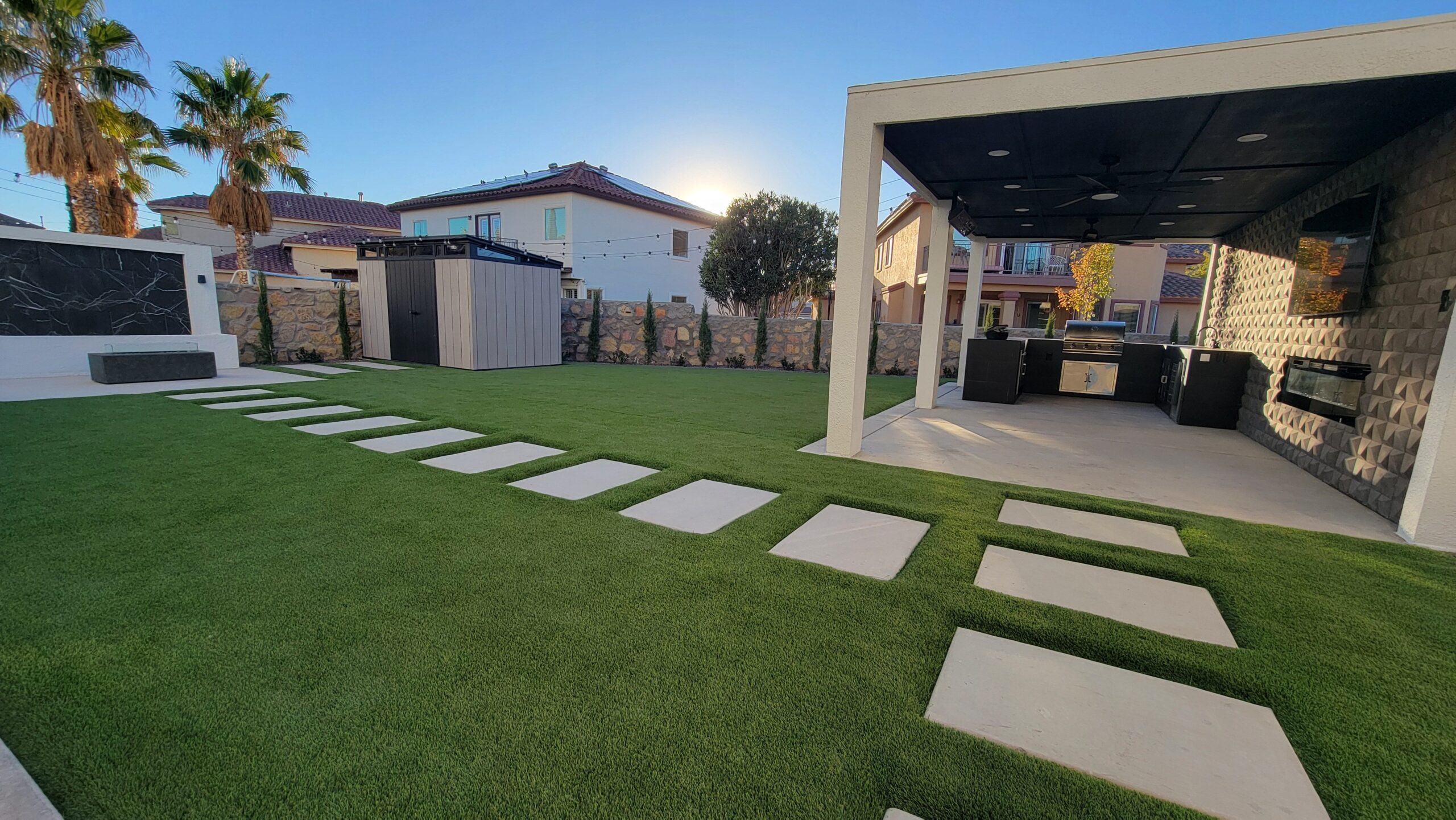
It can define separate outdoor zones and provide a backdrop for landscaping, seating, pools, or outdoor kitchens.
For example, a privacy fence behind a patio can make the seating area feel more intentional, while a decorative fence around landscaping can help organize the visual layout of the yard.
The fence can also hide utility areas, storage, equipment, or less attractive parts of the property.
Thinking about these uses during planning can make the fence more valuable as part of the overall backyard design.
Fence Planning Checklist
Before choosing a residential fence, consider the following:
- What is the main purpose of the fence?
- How much privacy do you need?
- Is security a priority?
- Do you need to contain pets?
- Is the fence near a pool?
- What height is appropriate?
- How much maintenance are you comfortable with?
- Which materials fit the style of the home?
- How much sun and wind does the area receive?
- Where should gates be located?
- Do you need vehicle access?
- Will landscaping grow near the fence?
- Does the fence need to hide equipment or storage?
- What local requirements apply?
- How will the fence connect with patios and other outdoor features?
Answering these questions can help narrow down the best material and design.
Common Fence Selection Mistakes
One common mistake is choosing a fence based only on appearance.
A design may look attractive but fail to provide enough privacy, security, or durability for the property.
Other common mistakes include:
- Choosing a fence that requires more maintenance than expected
- Ignoring wind exposure
- Selecting the wrong height
- Placing gates in inconvenient locations
- Forgetting pool or pet requirements
- Using materials that do not coordinate with the home
- Failing to consider future landscaping
- Ignoring drainage around fence posts and walls
- Not checking local requirements before installation
Planning these details early can help avoid expensive changes later.
How Much Does a New Fence Cost?
Fence installation cost depends on many factors, including material, height, length, terrain, gates, demolition, site access, and design complexity.
A simple residential fence may cost significantly less than a custom fence with masonry columns, decorative metal, multiple gates, or specialty finishes.
Because every property is different, homeowners should compare the complete scope of work rather than focusing only on the price per linear foot.
The cheapest option is not always the most economical over time if it requires frequent maintenance or replacement.
Privacy, Security, and Style: Finding the Right Balance
The best fence often combines all three priorities rather than focusing on only one.
A privacy fence should still look appropriate for the home, while a security fence should not necessarily make the property feel uninviting. A decorative fence should also be durable enough for everyday use.
Before deciding, think about which priority matters most and where you are willing to compromise.
For some homeowners, maximum privacy is the goal. Others may prefer a more open design that improves security while preserving views.
The right answer depends on the property.
Choosing a Fence for an El Paso Home
Fence selection in El Paso should account for sun exposure, wind, maintenance, privacy needs, and the way the outdoor space will be used.
Materials should be selected for long-term exterior performance, while the design should coordinate with the home, landscaping, patios, pools, and other outdoor features.
A well-designed fence can make a backyard feel more private and organized while helping define the edges of the property.
It can also become an important part of a complete outdoor renovation rather than simply a functional boundary.
Plan Your Fence With the Entire Property in Mind
The right fence should work with the home and backyard as a complete system.
Consider where people enter the yard, where they gather, which views should remain open, which areas need privacy, and how the fence will connect with landscaping and hardscape.
Planning the fence together with patios, pools, pergolas, outdoor kitchens, lighting, and landscaping can create a more cohesive result.
Fence Installation With Anson General Contracting
Whether your priority is privacy, security, style, or a combination of all three, choosing the right fence starts with understanding how your property is used.
Anson General Contracting can help homeowners in El Paso plan fencing as part of a larger outdoor renovation or as a standalone improvement.
Contact Anson General Contracting to discuss your residential fencing project and explore options that fit your home, backyard, and long-term needs.