A well-designed landscape is a valuable asset—but without consistent care, even the most beautiful outdoor spaces can deteriorate quickly. Weather changes, plant growth cycles, and soil conditions all place ongoing demands on a property. Investing in landscape maintenance services ensures that outdoor environments remain healthy, functional, and visually appealing throughout the year.
Seasonal maintenance isn’t just about appearance. It plays a critical role in protecting plants, hardscapes, and irrigation systems from long-term damage. When maintenance aligns with the natural rhythms of the landscape, homeowners preserve both beauty and value.
Why Seasonal Maintenance Matters
Landscapes are dynamic systems. Each season brings different challenges and opportunities for care. Ignoring seasonal needs can lead to compounding problems that require costly repairs later.
Seasonal maintenance helps to:
- Support healthy plant growth
- Reduce stress caused by extreme weather
- Identify issues before they escalate
- Preserve hardscape integrity
- Extend the lifespan of landscape features
By responding proactively, property owners protect their investment year after year.
Using a Seasonal Landscaping Checklist for Consistency
A structured seasonal landscaping checklist ensures that essential tasks are completed at the right time. This approach prevents overlooked maintenance and keeps landscapes functioning efficiently.
Key seasonal considerations include:
Spring preparation
Encourages new growth and addresses winter wear.
Summer protection
Focuses on water efficiency and heat stress reduction.
Fall readiness
Prepares plants and soil for cooler conditions.
Winter preservation
Minimizes damage from cold and dormant periods.
Following a checklist keeps maintenance organized and effective.
Landscape Upkeep Tips That Make a Difference
Consistent care doesn’t always require dramatic interventions. Simple, strategic landscape upkeep tips can significantly improve long-term performance when applied regularly.
Effective upkeep strategies include:
- Monitoring soil moisture levels
- Adjusting irrigation based on weather
- Removing debris that restricts airflow
- Managing plant spacing as growth occurs
- Observing early signs of stress or disease
Small actions taken at the right time prevent larger problems down the line.
Achieving Year-Round Landscape Care
True year round landscape care means adapting maintenance to the needs of each season rather than applying the same routine continuously. Plants, turf, and hardscapes all respond differently depending on temperature, moisture, and daylight.
Year-round care focuses on:
- Seasonal pruning and trimming
- Soil conditioning and nutrient management
- Irrigation adjustments
- Drainage inspection
- Structural assessments of hardscape elements
This adaptive approach keeps landscapes balanced and resilient throughout the year.
The Value of Professional Landscape Maintenance
While some tasks can be handled by homeowners, professional landscape maintenance offers expertise and consistency that protect the landscape at a higher level.
Professional services provide:
- Trained assessment of plant health
- Proper timing for seasonal tasks
- Early detection of potential issues
- Specialized tools and techniques
- Long-term planning and documentation
Professional oversight ensures that maintenance decisions support the overall design and longevity of the landscape.
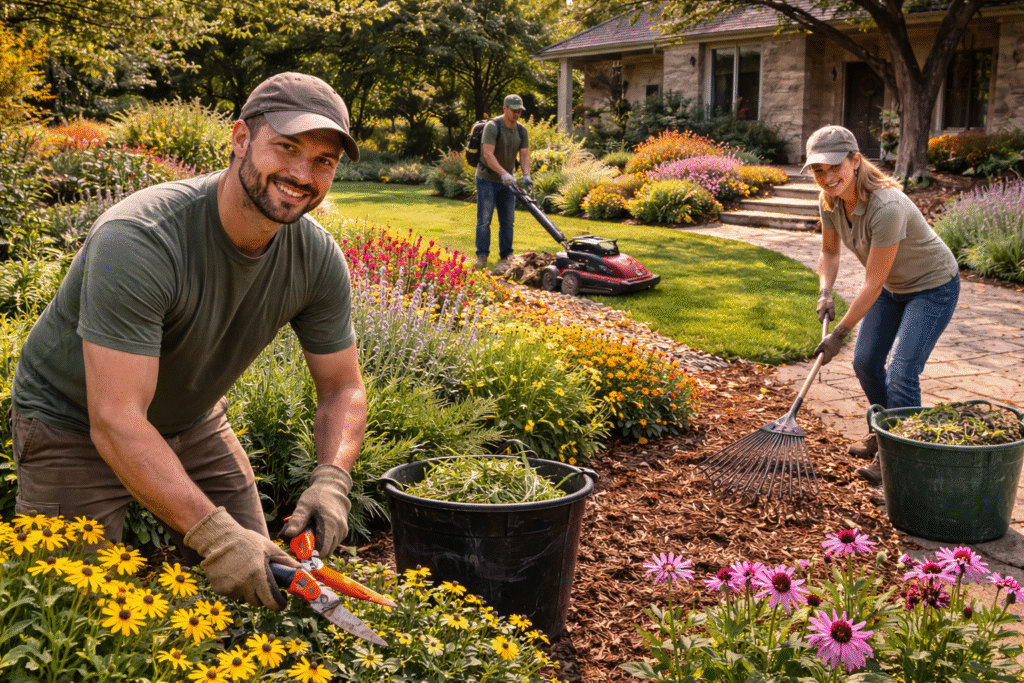
Preventing Long-Term Damage Before It Starts
Neglect allows minor issues to grow into major expenses. Proactive maintenance helps prevent landscape deterioration by addressing problems early—often before they are visible to untrained eyes.
Preventive care reduces:
- Soil erosion
- Plant loss
- Irrigation inefficiencies
- Hardscape cracking or shifting
- Weed and pest infestations
This approach protects both aesthetic value and structural integrity.
Protecting Property Value Through Landscape Care
Consistent property landscape care plays a direct role in preserving and increasing property value. Well-maintained outdoor spaces create positive first impressions and signal overall property health.
Benefits include:
- Stronger curb appeal
- Healthier, more mature plantings
- Reduced repair and replacement costs
- Increased buyer confidence
- Greater long-term return on investment
Landscapes that are maintained seasonally age gracefully instead of declining.
Seasonal Maintenance and Environmental Responsibility
Seasonal maintenance isn’t just beneficial for property owners—it also supports environmental sustainability. Proper timing reduces waste and minimizes unnecessary resource use.
Responsible maintenance practices include:
- Using water efficiently during hot months
- Avoiding over-fertilization
- Supporting soil health naturally
- Protecting beneficial insects and wildlife
- Reducing runoff and erosion
These practices balance performance with environmental stewardship.
Common Maintenance Mistakes to Avoid
Even well-intentioned care can cause harm if timing or techniques are incorrect. Avoiding these mistakes preserves plant health and design integrity.
Common errors include:
- Overwatering during cooler seasons
- Pruning at the wrong time of year
- Ignoring drainage and soil conditions
- Delaying repairs until damage is visible
- Treating all plants the same regardless of species
Professional guidance helps prevent these issues and ensures appropriate care.
Conclusion
Seasonal landscape maintenance is an essential part of protecting outdoor investments. By responding to the changing needs of plants and structures throughout the year, homeowners preserve beauty, functionality, and long-term value. Thoughtful, consistent care transforms landscapes from short-term installations into enduring assets that continue to enhance properties season after season.