Privacy and peace are becoming top priorities for homeowners, especially in growing residential areas where properties sit closer together and ambient noise is constant. Thoughtful landscape design offers an elegant, natural way to address both concerns without relying on harsh barriers or artificial solutions. By using landscape plants strategically, outdoor spaces can feel more secluded, comfortable, and serene.
Well-planned landscaping doesn’t just beautify a property—it actively shapes how sound travels and how much visual exposure a homeowner experiences. When design decisions are intentional, landscapes become powerful tools for comfort and protection.
Why Privacy and Noise Control Matter in Modern Homes
As neighborhoods become denser, homeowners often experience:
- Increased street and traffic noise
- Limited separation between properties
- Overlooked backyards
- Reduced sense of retreat outdoors
Without intervention, these factors can significantly reduce how enjoyable an outdoor space feels. Landscape design offers solutions that work with nature to soften sound and shield views, creating environments that feel calm and personal.
Landscape Privacy Solutions That Feel Natural
Unlike solid fences or walls, landscape privacy solutions blend seamlessly into the environment. Plants and layered designs create visual separation while maintaining an organic, welcoming appearance.
Effective privacy solutions often include:
Layered planting
Combining trees, shrubs, and ground cover for depth.
Strategic placement
Blocking key sightlines from neighboring properties.
Varied heights and textures
Preventing a flat or artificial look.
Year-round coverage
Ensuring privacy even during seasonal changes.
These solutions enhance both comfort and aesthetic appeal.
Creative Privacy Landscaping Ideas for Any Yard
Thoughtful privacy landscaping ideas adapt to different property sizes and layouts. Even small yards can benefit from intentional design that maximizes seclusion without overwhelming the space.
Popular ideas include:
- Living screens using dense shrubs
- Vertical planting to save space
- Corner plant groupings to block angles of view
- Green buffers along property lines
- Layered borders that define outdoor rooms
When tailored to the site, these approaches create privacy without sacrificing openness.
Using Natural Elements as Sound Buffers
Plants don’t just block views—they also influence how sound moves. Dense plantings can function as natural noise barriers, absorbing and diffusing sound waves rather than reflecting them.
Sound-reducing benefits come from:
Leaf density
Thicker foliage absorbs more noise.
Multiple layers
Sound is disrupted as it passes through varied plant heights.
Irregular textures
Uneven surfaces scatter sound waves.
Continuous coverage
Reduces direct sound pathways.
While landscaping won’t eliminate noise entirely, it can significantly reduce its intensity and harshness.
Designing for Backyard Privacy Without Closing Off Space
Effective backyard privacy design balances enclosure with openness. The goal is to create a sense of retreat without making the yard feel boxed in.
Design strategies include:
- Framing views instead of blocking everything
- Creating private zones within the yard
- Using curved plantings for softer transitions
- Allowing light and airflow to pass through
This approach ensures privacy feels intentional and comfortable rather than restrictive.
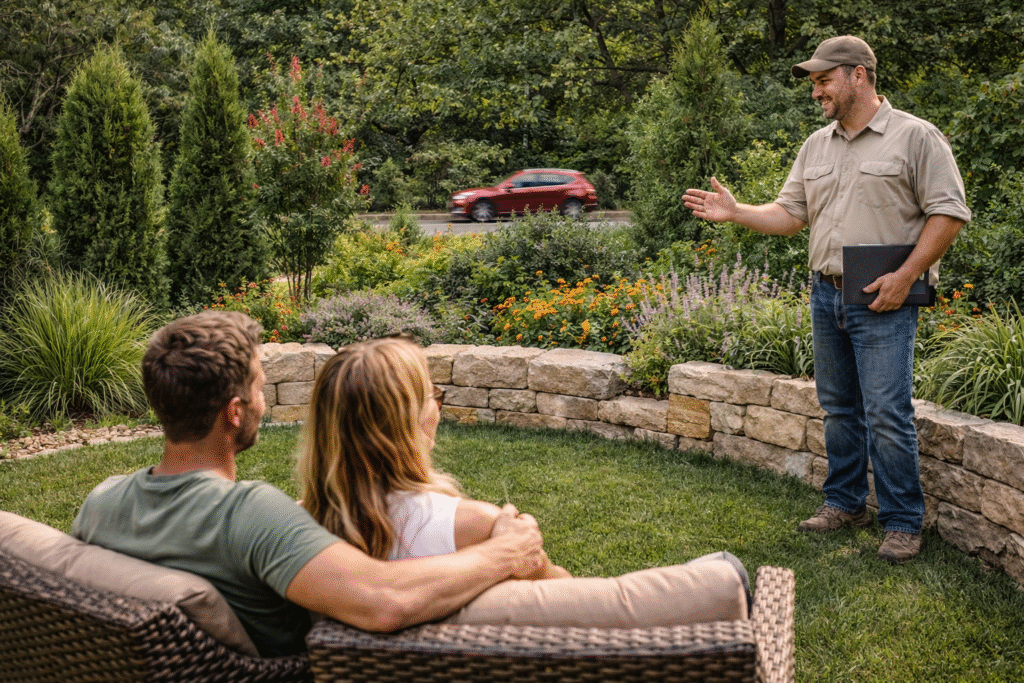
Residential Landscaping That Protects Personal Space
Residential privacy landscaping focuses on the specific needs of homeowners—how they relax, entertain, and use their outdoor spaces daily. Custom layouts address both visual and acoustic concerns based on the property’s surroundings.
This type of design considers:
- Neighbor proximity
- Street noise levels
- Elevation differences
- Outdoor activity zones
- Seasonal changes in foliage
By tailoring solutions to real conditions, landscapes deliver consistent privacy year-round.
How Plants Reduce Outdoor Noise Naturally
Strategic planting contributes directly to outdoor sound reduction by softening and dispersing noise from roads, neighbors, and nearby activity.
Key factors that influence sound control include:
- Plant mass and density
- Width of planted areas
- Distance from noise source
- Combination of plants and terrain
When combined with grading or hardscape elements, plant-based solutions become even more effective.
Integrating Privacy and Noise Control Into Overall Design
Privacy and sound management work best when integrated into the broader landscape plan rather than added later. Early planning ensures these elements enhance, rather than disrupt, the design.
Integrated planning allows for:
- Seamless visual flow
- Coordinated plant selection
- Efficient use of space
- Balanced light and shade
- Long-term performance
This holistic approach results in landscapes that feel cohesive and purposeful.
Long-Term Benefits of Thoughtful Privacy Design
Investing in privacy-focused landscaping offers lasting advantages beyond immediate comfort.
Long-term benefits include:
- Increased outdoor usability
- Improved relaxation and well-being
- Enhanced property value
- Reduced reliance on artificial barriers
- A more peaceful home environment
As plants mature, these benefits often increase rather than diminish.
Conclusion
Thoughtful landscape design transforms outdoor spaces into private, peaceful retreats. By using natural elements to manage visibility and sound, homeowners can enjoy greater comfort without sacrificing beauty or openness. When privacy and noise control are considered from the beginning, landscapes become not just visually appealing, but deeply supportive of daily life—offering calm, protection, and long-term value in a natural, enduring way.