Designing a landscape that is both visually striking and easy to maintain can feel like a challenge—especially in Texas, where heat, drought, and unpredictable weather are part of daily life. The solution lies in choosing the right plants. Incorporating drought resistant plants into outdoor spaces allows homeowners to enjoy lush, attractive landscapes without excessive water use or constant upkeep.
Native and regionally adapted plants are uniquely suited to thrive in Texas conditions. They offer long-term durability, support local ecosystems, and significantly reduce maintenance costs. When thoughtfully designed, landscapes built around native plants deliver beauty, resilience, and real financial savings.
Why Native Plants Are Ideal for Texas Landscapes
Native plants have evolved over thousands of years to survive the local climate, soil, and rainfall patterns. This natural adaptation makes them far more reliable than non-native alternatives that require constant intervention to survive.
Key advantages include:
- Better tolerance to heat and drought
- Lower water requirements
- Reduced need for fertilizers and pesticides
- Improved resistance to local pests
- Longer lifespan with minimal care
By working with nature rather than against it, native landscaping creates outdoor spaces that are both sustainable and visually appealing.
Understanding Native Texas Plants
Native Texas plants are species that naturally occur in the state without human introduction. From grasses and perennials to shrubs and trees, these plants are deeply connected to the regional environment.
Examples of their strengths include:
Climate adaptation
They are accustomed to extreme heat, limited rainfall, and sudden temperature shifts.
Soil compatibility
Native plants thrive in local soil types, including clay, sandy, and rocky conditions.
Seasonal beauty
Many native species offer colorful blooms, textured foliage, and striking forms throughout the year.
This adaptability makes them a reliable foundation for long-lasting landscape design.
Texas Native Landscaping: A Smart Design Approach
Texas native landscaping is more than a trend—it’s a strategic approach to outdoor design that prioritizes resilience and efficiency. Instead of forcing high-maintenance plants to survive, this method builds landscapes around species that naturally flourish.
Benefits of this approach include:
- Reduced irrigation demands
- Lower maintenance costs
- Improved soil health
- Stronger resistance to drought cycles
- Long-term aesthetic consistency
Landscapes designed with native plants often look better over time, not worse, as plants mature naturally within their environment.
Selecting the Right Plants for Your Property
Choosing the right plants Texas landscapes need depends on factors such as sun exposure, soil conditions, and intended use of the space. Native plants come in a wide range of forms, allowing designers to create dynamic, layered compositions.
Common categories include:
Ground covers
Help prevent erosion and retain soil moisture.
Flowering perennials
Provide seasonal color and attract pollinators.
Shrubs
Offer structure, privacy, and wind protection.
Trees
Create shade, reduce temperatures, and anchor the design.
When properly matched to the site, these plants require minimal intervention to thrive.
Sustainable Plants That Support the Environment
Incorporating sustainable plants into landscape design benefits not only homeowners but also the surrounding ecosystem. Native species support local wildlife, including birds, butterflies, and beneficial insects.
Environmental advantages include:
- Reduced water consumption
- Improved air and soil quality
- Support for pollinators
- Lower carbon footprint
- Reduced chemical runoff
Sustainable plant choices help landscapes become part of the solution rather than a strain on natural resources.
Designing With Landscape Plants for Visual Impact
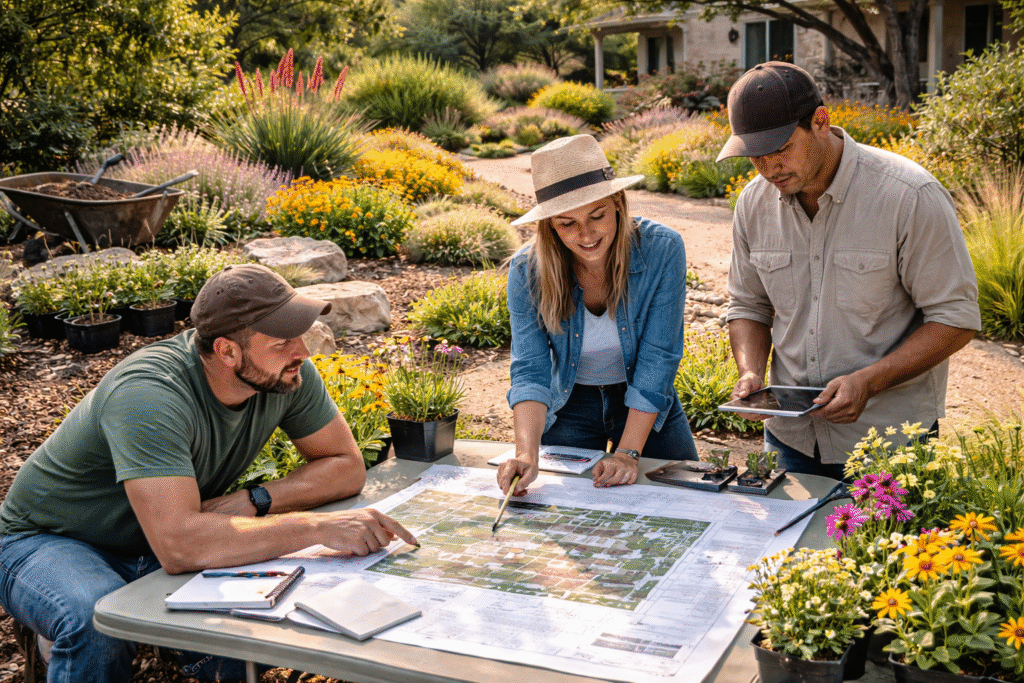
Native landscape plants offer a surprising level of design versatility. From bold architectural forms to soft, flowing textures, they can be arranged to create modern, traditional, or naturalistic styles.
Design strategies include:
- Layering plants by height for depth
- Mixing textures for visual interest
- Using repetition to create cohesion
- Allowing natural growth patterns to shine
- Highlighting seasonal changes
With professional planning, native plants can look just as refined and intentional as any ornamental garden.
Durability That Saves Time and Money
One of the biggest advantages of native landscaping is durability. Because native plants are adapted to local conditions, they are less likely to fail during extreme weather events.
This durability leads to:
- Fewer plant replacements
- Reduced labor and maintenance
- Lower long-term landscaping costs
- Consistent performance year after year
Over time, the savings from reduced water use and maintenance can be substantial.
Regional Landscape Design: Working With the Land
Successful regional landscape design respects the natural characteristics of the area. In Texas, this means embracing heat tolerance, water efficiency, and soil compatibility rather than fighting them.
Regional design focuses on:
- Using plants adapted to local microclimates
- Designing for natural rainfall patterns
- Reducing dependence on artificial inputs
- Creating harmony between built and natural elements
This approach results in landscapes that feel authentic, balanced, and enduring.
Common Myths About Native Plants
Despite their benefits, native plants are sometimes misunderstood. Addressing these misconceptions helps homeowners feel confident in their choices.
Myth 1: Native plants look wild or messy
With proper design and maintenance, native landscapes can be clean, modern, and elegant.
Myth 2: Native plants lack color
Many native species offer vibrant blooms and seasonal changes.
Myth 3: Native landscapes are boring
The diversity of native plants allows for endless design possibilities.
Professional design transforms native plants into refined outdoor environments.
Conclusion
Native plants offer a powerful combination of beauty, resilience, and efficiency. By choosing plants that are naturally suited to the Texas environment, homeowners can enjoy landscapes that require less water, less maintenance, and fewer replacements over time. Thoughtful design transforms native plantings into visually striking outdoor spaces that perform reliably year after year—proving that sustainability and style can thrive together.