Outdoor spaces don’t disappear after sunset—they simply change. With thoughtful illumination, a landscape can take on an entirely new personality at night, becoming warmer, safer, and far more visually striking. A well-executed landscape lighting installation does more than provide visibility; it reshapes how a home is experienced, extending usability and enhancing architectural beauty long after daylight fades.
In modern residential design, lighting is no longer an afterthought. It is a strategic layer that adds depth, dimension, and intention to outdoor environments. When planned correctly, lighting highlights what matters most, subtly guides movement, and elevates the entire property.
Why Outdoor Lighting Is a Design Essential
Lighting plays a critical role in how people interact with their outdoor spaces. Beyond aesthetics, it improves functionality, safety, and overall comfort.
Key benefits include:
- Increased nighttime usability of outdoor areas
- Enhanced visibility along walkways and entries
- Improved safety for family and guests
- Highlighting architectural and landscape features
- Creating mood and atmosphere
- Adding long-term value to the property
A strategic outdoor landscape lighting design ensures that no element is overexposed or lost in shadow, resulting in a balanced and visually engaging environment.
Lighting as a Tool for Transformation
The right lighting can dramatically alter how a landscape feels. Subtle illumination can make a small yard feel expansive, while focused accents can turn ordinary features into focal points.
Lighting has the power to:
- Add depth by layering light and shadow
- Create visual hierarchy throughout the yard
- Emphasize textures in stone, wood, and foliage
- Guide the eye naturally through the space
- Establish distinct nighttime zones
Rather than flooding the yard with brightness, modern lighting design emphasizes precision and restraint.
Enhancing Functionality and Safety
Outdoor lighting plays a vital role in making landscapes usable after dark. Clear visibility reduces the risk of trips and falls while making navigation intuitive.
Key functional areas that benefit from illumination include:
Walkways and steps
Soft, directional light ensures safe movement without glare.
Entrances and transitions
Illuminated entry points improve accessibility and comfort.
Seating and gathering areas
Balanced lighting allows people to relax, dine, or socialize comfortably.
Perimeter zones
Low-level lighting helps define boundaries and discourages unwanted access.
Well-planned backyard lighting ensures that outdoor living doesn’t end when the sun goes down.
Highlighting Architecture and Landscape Features
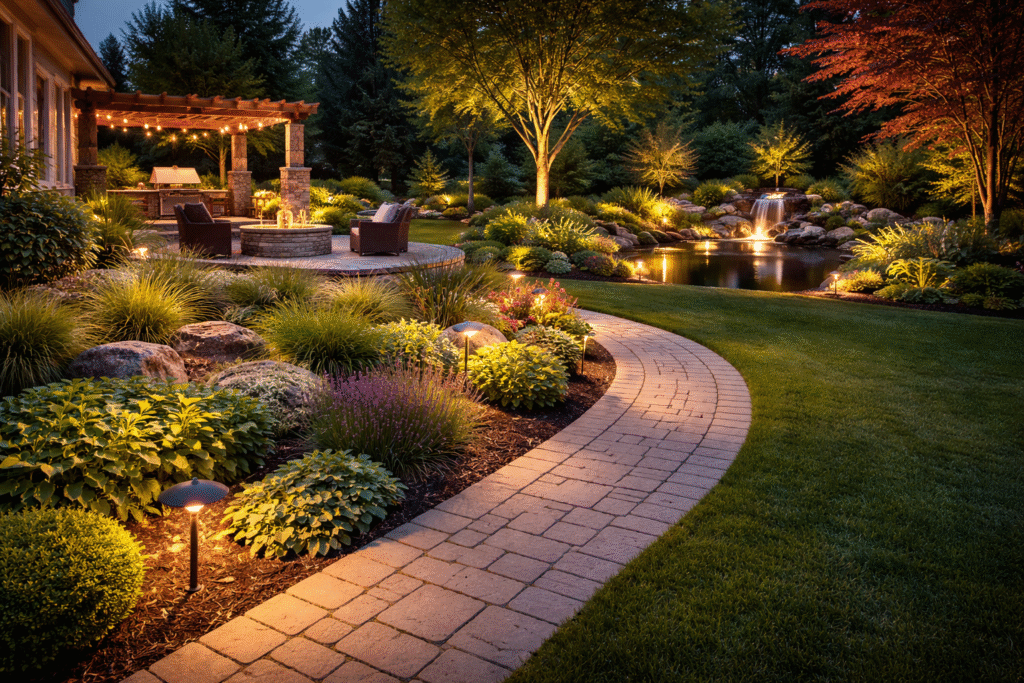
One of the most powerful uses of lighting is accenting structure and form. Strategic placement draws attention to architectural lines, textures, and natural features that might go unnoticed during the day.
Architectural landscape lighting often focuses on:
- Home facades and exterior walls
- Columns, pergolas, and arches
- Mature trees and specimen plants
- Stone walls and retaining features
- Water elements and sculptures
These accents add drama and sophistication while maintaining subtlety.
Creating Mood Through Layered Lighting
The most visually compelling outdoor spaces use layers of light rather than a single source. Layering adds depth and creates a natural rhythm across the landscape.
A balanced lighting plan typically includes:
Ambient lighting
Provides general illumination and sets the overall tone.
Task lighting
Focused light for specific activities such as dining or walking.
Accent lighting
Highlights focal points and adds visual interest.
Shadow effects
Controlled darkness that enhances contrast and atmosphere.
This layered approach creates a dynamic environment that feels intentional rather than overly bright.
The Role of Energy Efficiency in Modern Lighting
Sustainability has become a major priority in outdoor design. Homeowners increasingly seek solutions that minimize energy use without sacrificing quality or beauty.
Energy efficient outdoor lighting options offer:
- Reduced electricity consumption
- Longer fixture lifespan
- Lower maintenance requirements
- Consistent light quality
- Minimal heat output
LED systems and smart controls allow homeowners to enjoy beautifully lit landscapes while reducing environmental impact and long-term costs.
Boosting Visual Impact From the Street
Exterior lighting doesn’t just affect backyard enjoyment—it plays a crucial role in how a property is perceived from the street. Thoughtful illumination enhances curb appeal, making the home feel welcoming and well cared for even at night.
Effective front-yard lighting often includes:
- Highlighted pathways and entry steps
- Soft illumination of architectural features
- Balanced light distribution across the facade
- Framing trees or plant beds with subtle accents
This approach strengthens first impressions and adds a sense of refinement to the property.
Common Outdoor Lighting Mistakes to Avoid
Even high-quality fixtures can fall short if lighting is poorly planned. Common mistakes include:
- Overlighting, which flattens visual interest
- Using mismatched fixture styles
- Ignoring glare and light pollution
- Placing lights too close or too far from features
- Failing to consider nighttime sightlines
Professional planning ensures that lighting enhances rather than overwhelms the landscape.
Why Professional Installation Makes a Difference
Lighting systems require more than aesthetic judgment—they involve electrical safety, proper placement, and long-term durability. Professional installation ensures the system performs reliably and looks cohesive over time.
Benefits of expert installation include:
- Correct voltage distribution
- Secure wiring and weatherproof connections
- Precise fixture placement
- Long-term system reliability
- Compliance with safety standards
A professionally installed system protects your investment and ensures consistent performance.
Designing for Long-Term Enjoyment
A successful lighting plan evolves with the landscape. As plants mature and outdoor spaces change, lighting should remain adaptable.
Smart design accounts for:
- Plant growth and seasonal changes
- Future outdoor upgrades
- Maintenance accessibility
- Flexible controls and automation
This forward-thinking approach ensures the landscape remains visually stunning year after year.
Conclusion
Outdoor lighting has the power to completely transform a landscape, turning it into a functional, inviting, and visually compelling environment after dark. With thoughtful planning, precise placement, and high-quality installation, lighting becomes an integral design element rather than a finishing touch. The right approach enhances safety, highlights beauty, and extends the enjoyment of outdoor spaces—creating a landscape that feels just as intentional and inspiring at night as it does during the day.