Not every landscape challenge can be solved with plants alone. Slopes, uneven terrain, and soil movement often require structural solutions to ensure long-term stability and safety. This is where retaining wall installation becomes essential. Far from being purely functional, retaining walls play a critical role in shaping outdoor spaces, protecting property, and enhancing the overall design of a landscape.
When properly planned and engineered, retaining walls provide both strength and visual appeal. They allow homeowners to reclaim unusable areas, prevent damage, and create outdoor environments that are safe, durable, and visually cohesive.
Why Landscapes Need Structural Support
Gravity constantly affects soil, especially on sloped properties. Without proper reinforcement, soil movement can lead to erosion, drainage problems, and structural damage over time.
Landscapes often require structural support when they include:
- Steep slopes or elevation changes
- Soil that shifts or washes away easily
- Uneven terrain limiting usable space
- Water runoff concentrating in one area
- Proximity to foundations or hardscapes
Retaining walls address these challenges by holding soil in place and redistributing pressure safely.
Preventing Soil Loss With Erosion Control
One of the primary purposes of retaining walls is erosion control landscaping. Unchecked erosion gradually removes soil, weakens plant roots, and exposes hardscape elements.
Retaining walls help control erosion by:
Stabilizing slopes
They prevent soil from sliding downhill during heavy rain.
Managing water flow
Walls can redirect runoff away from vulnerable areas.
Protecting plantings
By holding soil in place, they preserve root systems.
Preserving grade levels
They maintain the intended shape of the landscape.
This protection is especially important in areas with seasonal rainfall or compacted soil.
Creating Practical Yard Solutions
Beyond stability, retaining walls offer versatile yard solutions that improve how outdoor spaces function. By reshaping terrain, walls can transform challenging landscapes into usable areas.
Functional benefits include:
- Creating level spaces for patios or seating
- Expanding planting zones
- Improving access across the yard
- Defining outdoor rooms
- Increasing overall usability
Instead of working around a slope, homeowners gain control over their outdoor layout.
The Importance of Retaining Wall Design
Effective retaining wall design balances engineering requirements with visual harmony. A wall that performs well structurally but clashes with its surroundings can disrupt the landscape’s overall appeal.
Good design considers:
Wall height and length
Determines load requirements and materials.
Material selection
Stone, concrete, or block influence both strength and style.
Drainage integration
Prevents pressure buildup behind the wall.
Visual continuity
Ensures the wall complements existing features.
Design decisions made early prevent costly modifications later.
Supporting the Landscape as a Structural System
A landscape is more than plants and paths—it’s a landscape structural system where each element affects the others. Retaining walls support this system by stabilizing soil and protecting adjacent features.
Structural support benefits include:
- Reduced stress on foundations
- Protection for walkways and patios
- Improved drainage performance
- Long-term soil integrity
By reinforcing the landscape’s framework, retaining walls safeguard the entire outdoor environment.
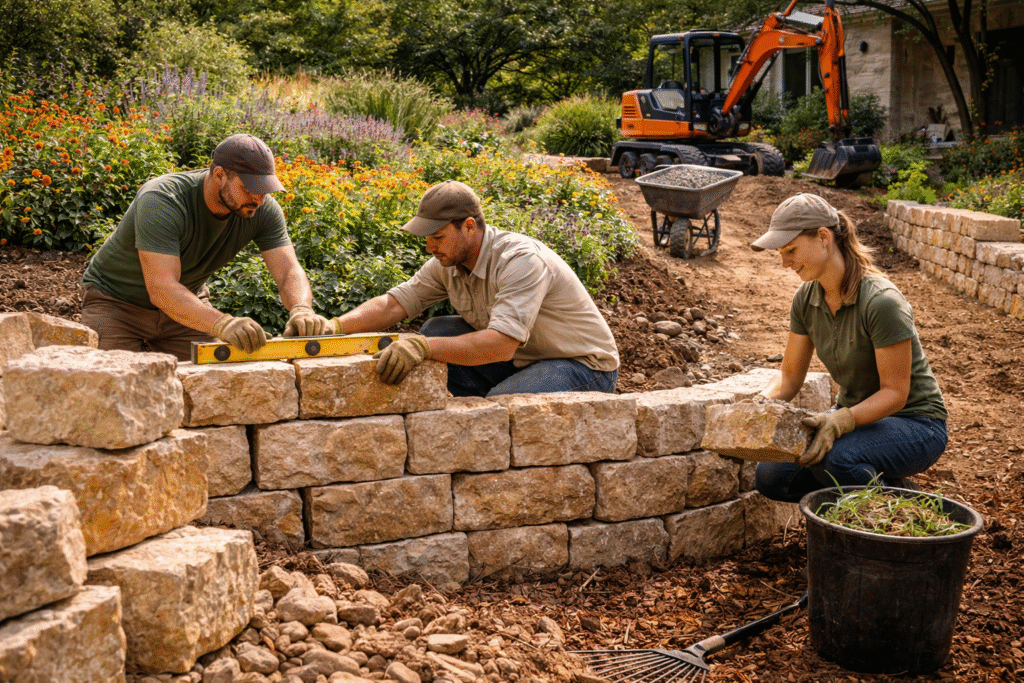
How Retaining Walls Achieve Soil Stabilization
At their core, retaining walls are engineered for soil stabilization. They counteract the natural forces that cause soil to shift under pressure.
Stabilization methods include:
Weight-based resistance
Heavy materials counteract soil pressure.
Reinforced systems
Internal support adds strength where needed.
Proper backfill
Ensures consistent pressure distribution.
Integrated drainage
Releases water to reduce hydrostatic force.
Without these considerations, walls may fail prematurely—highlighting the importance of professional planning.
Integrating Walls Into the Hardscape
Retaining walls are a key element of hardscape engineering, working in coordination with patios, steps, walkways, and other built features. When integrated correctly, they create seamless transitions between levels.
Integrated hardscape benefits include:
- Improved circulation across elevations
- Safer access between zones
- Stronger visual structure
- Unified material palettes
- Enhanced long-term durability
Rather than isolated structures, walls become part of a cohesive outdoor system.
Common Situations That Call for Retaining Walls
Many homeowners don’t realize a retaining wall is needed until damage becomes visible. Recognizing the signs early prevents costly repairs.
Common indicators include:
- Soil washing away after rainfall
- Leaning fences or structures
- Cracked or uneven hardscapes
- Exposed roots on slopes
- Standing water at the base of inclines
Addressing these issues early preserves both safety and property value.
Professional Installation Makes the Difference
While retaining walls may appear straightforward, improper construction can lead to failure. Load calculations, drainage, and material selection require experience and precision.
Professional installation ensures:
- Compliance with structural requirements
- Proper drainage and backfill
- Long-term performance
- Visual alignment with the landscape
- Reduced risk of collapse or repair
Expert execution transforms retaining walls from potential liabilities into lasting assets.
Long-Term Benefits of Structural Landscape Solutions
When designed and built correctly, retaining walls deliver long-term advantages that extend beyond immediate problem-solving.
These benefits include:
- Increased usable outdoor space
- Improved safety and accessibility
- Enhanced landscape longevity
- Reduced maintenance issues
- Increased property value
Structural solutions protect the landscape’s form and function for years to come.
Conclusion
Retaining walls play a vital role in protecting landscapes from natural forces while unlocking new possibilities for outdoor use. By stabilizing soil, managing elevation changes, and reinforcing the landscape’s structure, these features provide both security and design flexibility. When thoughtfully planned and professionally executed, retaining walls become enduring elements that support safe, functional, and visually balanced outdoor spaces.