Stamped concrete vs. pavers is the focus of this guide for El Paso homeowners planning a project that has to handle desert heat, wind, and limited water.
Choosing the right patio material is an important part of creating a beautiful and functional outdoor living space. Whether you’re building a new backyard patio or upgrading an existing outdoor area, two of the most popular options are stamped concrete and pavers. Both materials offer durability, attractive designs, and opportunities to customize your backyard, but they differ in installation costs, maintenance requirements, appearance, and long-term performance.
For homeowners in El Paso, TX, selecting the right patio material also means considering the region’s desert climate. Intense sunlight, high summer temperatures, occasional heavy rainfall, and changing weather conditions can affect how outdoor surfaces perform over time. Understanding the differences between stamped concrete and pavers can help you make an informed decision that fits your budget, lifestyle, and backyard remodeling goals.
In this guide, we’ll compare stamped concrete vs. pavers for patios, including their advantages, disadvantages, installation costs, durability, and maintenance requirements to help you determine which is better for your El Paso home.
What Is Stamped Concrete?
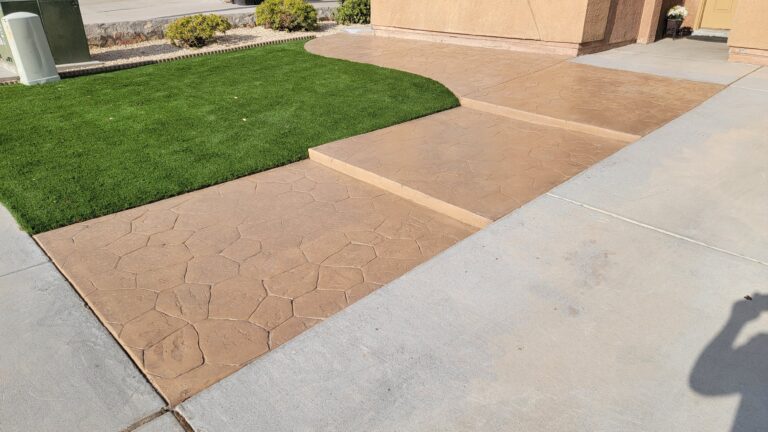
Stamped concrete is a decorative concrete surface designed to imitate the appearance of materials such as natural stone, brick, slate, tile, or wood. During installation, freshly poured concrete is treated with specialized stamps that create patterns and textures before the material fully hardens.
Color can also be incorporated into the concrete to achieve different finishes, making stamped concrete a versatile choice for residential patios, pool decks, walkways, and outdoor entertainment areas.
One of the biggest advantages of stamped concrete patio installation is its ability to provide the appearance of more expensive materials without requiring individual stones or pavers. Homeowners can select from a variety of patterns and colors to complement their home’s architecture and landscaping.
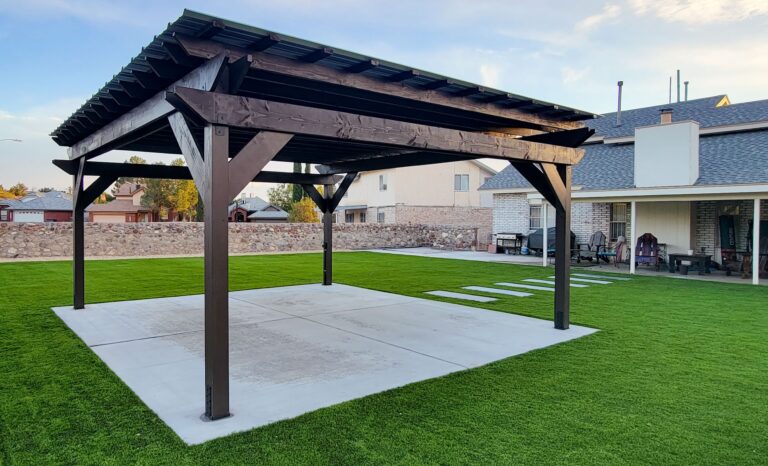
Stamped concrete is especially popular for backyard renovations in El Paso because it can create a cohesive patio surface that works well with outdoor kitchens, pergolas, covered seating areas, and desert-inspired landscaping.
What Are Patio Pavers?
Patio pavers are individual units made from materials such as concrete, brick, or natural stone. These pieces are installed over a carefully prepared foundation and arranged in patterns to create a durable outdoor surface.
Unlike stamped concrete, which forms a continuous slab, pavers create a segmented patio surface. This construction method allows individual pieces to be removed, adjusted, or replaced when necessary.
Paver patios offer extensive design flexibility, with different sizes, shapes, textures, and colors available. Homeowners can create traditional brick patterns, contemporary geometric designs, or natural stone arrangements that complement the surrounding landscape.
For El Paso homeowners interested in custom patio installation, pavers can be particularly appealing because they allow decorative borders, curved walkways, and distinct outdoor living zones to be incorporated into the overall backyard design.
Stamped Concrete vs. Pavers: Installation Costs
Cost is one of the most important factors when comparing stamped concrete and pavers for a backyard patio. Both options are generally more expensive than basic poured concrete, but the final price depends on the materials selected, patio size, design complexity, and site preparation requirements.
How Much Does a Stamped Concrete Patio Cost?
Stamped concrete patios typically cost approximately $8 to $18 per square foot for installation, although elaborate patterns, multiple colors, challenging site conditions, and custom finishes can increase the total expense.
For example, a 300-square-foot stamped concrete patio could cost approximately $2,400 to $5,400 based on this general pricing range. These estimates are for preliminary budgeting and do not represent guaranteed local contractor prices.
Stamped concrete may offer a cost advantage for larger patio areas because the decorative pattern is applied to a poured surface rather than assembled using individual units. However, specialized labor, concrete preparation, reinforcement, finishing techniques, and sealing can influence the overall project cost.
How Much Does a Paver Patio Cost?
Concrete paver installation commonly ranges from approximately $7 to $20 per square foot, with premium products, natural stone, detailed patterns, or extensive groundwork potentially costing considerably more.
A 300-square-foot concrete paver patio could therefore cost approximately $2,100 to $6,000 based on general industry estimates. Actual paver patio installation costs in El Paso will vary depending on the selected materials and construction requirements.
Paver installation involves preparing a stable base, establishing proper drainage, positioning individual units, installing edge restraints, and filling the joints. The labor involved can increase project costs, especially for intricate designs.
When comparing stamped concrete vs. pavers cost, homeowners should remember that the pricing ranges overlap. Stamped concrete is often more affordable than premium pavers, but a simple paver design may cost less than highly customized stamped concrete.
Which Patio Material Is More Durable?
Both stamped concrete and pavers can provide excellent durability when professionally installed and properly maintained. However, the way each material responds to ground movement, temperature changes, and everyday use differs.
Stamped Concrete Durability
Stamped concrete forms a rigid slab, making it a strong and stable surface for patios, outdoor furniture, and entertainment areas. A properly constructed concrete patio can last for decades, although its appearance and structural condition depend on installation quality, drainage, and maintenance.
One potential disadvantage is cracking. Concrete can develop cracks because of shrinkage, soil movement, temperature changes, or insufficient preparation of the underlying surface.
Control joints help manage where cracking occurs, but they cannot completely prevent it. If a decorative concrete surface develops significant damage, matching the original stamped pattern and color during repairs can be challenging.
Paver Patio Durability
Pavers offer a different approach to durability because the patio consists of individual units rather than one continuous slab. The joints between pavers allow some movement, which can make segmented surfaces more adaptable to minor changes in the underlying ground.
When installed over a properly compacted base, high-quality concrete pavers can withstand regular foot traffic, outdoor furniture, and changing weather conditions.
If individual pavers become damaged or uneven, they can often be removed and replaced without reconstructing the entire patio. However, improperly installed pavers may shift, settle, or separate over time, making professional base preparation essential.
For homeowners concerned about future patio repairs, pavers generally provide greater flexibility.
Which Is Better for El Paso’s Desert Climate?
El Paso’s climate plays an important role in determining how patio materials perform. Intense sunlight, prolonged summer heat, dust, and occasional heavy rainfall can affect outdoor surfaces, making material selection and proper construction particularly important.
Heat Resistance and Surface Temperature
Both stamped concrete and pavers can become extremely hot when exposed to direct sunlight during the summer. Surface temperatures depend on factors such as color, texture, material composition, and exposure.
Dark-colored patio materials generally absorb more solar energy, while lighter finishes can reflect more sunlight and may remain cooler under similar conditions.
For backyard patio design in El Paso, homeowners may benefit from choosing lighter-colored concrete finishes or pavers, especially in areas where children and pets frequently spend time.
Adding a pergola, patio cover, or other shade structure can also improve comfort by reducing direct sunlight on the patio surface.
Sun Exposure and Color Retention
Extended UV exposure can affect the appearance of outdoor materials over time. Stamped concrete may experience color changes or sealer deterioration, particularly when exposed to intense sunlight without appropriate maintenance.
High-quality pavers can also experience fading, although color performance varies by manufacturer, material composition, and surface treatment.
Selecting products designed for outdoor use and following recommended maintenance procedures can help preserve the appearance of either patio material.
Drainage and Heavy Rainfall
Although El Paso has a dry climate, seasonal storms can produce significant rainfall over short periods. Proper backyard drainage is therefore essential when installing a new patio.
Stamped concrete typically requires carefully designed surface slopes and drainage paths because water cannot pass through the solid slab.
Conventional paver patios also require proper grading and drainage. However, specially designed permeable paver systems may allow rainwater to move through the joints into an engineered base, depending on soil conditions and installation design.
Both materials can perform well in the desert environment when the patio foundation and drainage system are professionally planned.
Stamped Concrete vs. Pavers: Maintenance Requirements
Maintenance is another important consideration for homeowners choosing between stamped concrete and pavers. Both materials require occasional care, but their specific maintenance needs differ.
Maintaining a Stamped Concrete Patio
Stamped concrete is relatively easy to maintain because it creates a continuous surface without the numerous joints found between individual pavers. Routine cleaning typically involves removing dust, leaves, dirt, and other debris.
Decorative concrete may also require periodic resealing to protect the finish, preserve its appearance, and reduce the absorption of stains. The recommended frequency depends on the type of sealer, exposure conditions, and amount of use.
Homeowners should also inspect the surface for cracks or signs of damage and address problems before they become more extensive.
Maintaining a Paver Patio
Paver patios require regular cleaning and occasional inspection of the joints between individual units. Over time, joint sand may need to be replenished, particularly in areas exposed to runoff, frequent cleaning, or heavy use.
Weeds can sometimes develop in paver joints when seeds and organic debris accumulate. Proper installation and maintenance can help reduce this issue.
If individual pavers settle or become uneven, they may need to be lifted and reset. Some paver materials also benefit from sealing, depending on the product and desired appearance.
While pavers may require more attention to joints and alignment, their ability to accommodate localized repairs can make long-term maintenance more manageable.
Which Patio Material Offers More Design Options?
Both stamped concrete and pavers provide numerous opportunities to customize an outdoor living space, making either material suitable for traditional and contemporary backyard designs.
Stamped Concrete Patio Designs
Stamped concrete offers flexibility in patterns, textures, and colors. Homeowners can choose designs that resemble flagstone, slate, brick, tile, or wood while maintaining the benefits of a poured concrete surface.
Popular stamped concrete patio ideas include large stone patterns, textured concrete finishes, decorative borders, and earth-toned colors that complement desert landscaping.
Stamped concrete is particularly effective for creating a unified appearance across larger outdoor areas, including connected patios, walkways, and entertainment spaces.
Paver Patio Designs
Pavers offer design flexibility through the arrangement of individual units. Different shapes, sizes, and colors can be combined to create distinctive patterns, decorative borders, and contrasting sections.
Popular paver patio designs include herringbone patterns, running bond layouts, modular stone arrangements, and contemporary large-format pavers.
Pavers can also be used to create curved patio edges, garden pathways, and transitions between outdoor living areas.
For homeowners interested in a highly customized backyard remodel in El Paso, the choice often depends on whether they prefer a continuous decorative surface or the appearance of individual stones.
Are Stamped Concrete or Pavers Better Around Swimming Pools?
Pool deck installation requires additional considerations because the surrounding surface is frequently exposed to water, sunlight, and barefoot traffic.
Stamped concrete can create an attractive pool deck that complements the swimming pool and surrounding backyard. However, certain smooth finishes and sealers can become slippery when wet. Choosing an appropriate texture and slip-resistant treatment is important for safety.
Pavers are another popular option for pool deck remodeling because they are available in textured finishes and can be replaced individually if damaged. However, their slip resistance and surface temperature depend on the specific product selected.
In El Paso, homeowners should pay particular attention to heat absorption when choosing pool deck materials. Light-colored surfaces, shaded areas, and materials designed for outdoor pedestrian use may improve comfort around the pool.
Neither stamped concrete nor pavers should automatically be considered cooler or safer without evaluating the specific finish, product, and installation conditions.
Which Option Is Easier to Repair?
Repairability is one of the most significant differences between stamped concrete and pavers.
When stamped concrete develops a crack or damaged section, repairs may involve filling the crack, resurfacing a portion of the patio, or replacing part of the slab. Although some damage can be repaired successfully, achieving an exact match with the original decorative pattern and color may be difficult.
Pavers are generally easier to repair because individual units can be removed and replaced. If a section settles because of base movement, contractors can often lift the affected pavers, correct the underlying problem, and reinstall the surface.
This advantage can be particularly valuable for homeowners who anticipate future landscaping changes, underground utility work, or additional backyard improvements.
For long-term flexibility, pavers typically offer a more convenient repair process.
How Long Do Stamped Concrete and Paver Patios Last?
Both patio materials can last for decades when installed correctly and maintained according to the manufacturer’s recommendations.
Stamped concrete can remain functional for 30 years or longer under suitable conditions, although decorative finishes and sealers may require maintenance throughout that period.
High-quality concrete pavers can also provide 30 years or more of service life. Individual units may remain in good condition even when sections of the patio need to be adjusted or repaired.
Actual longevity depends on factors such as installation quality, drainage, soil stability, weather exposure, traffic, and maintenance.
For homeowners planning a long-term backyard renovation in El Paso, investing in proper site preparation is just as important as selecting durable patio materials.
Which Patio Material Adds More Value to Your Home?
A well-designed patio can improve the appearance and functionality of a residential property while making outdoor spaces more appealing to future buyers.
Both stamped concrete and pavers can contribute to an attractive backyard, especially when incorporated into a coordinated outdoor living design featuring landscaping, shade structures, seating areas, and entertainment spaces.
Stamped concrete may be appealing to homeowners who want a decorative patio with a relatively straightforward design and potentially lower initial installation costs.
Pavers may attract homeowners who appreciate natural stone appearances, detailed patterns, and the ability to repair individual sections over time.
However, neither material guarantees a specific increase in property value. The potential return on investment depends on the local real estate market, construction quality, overall backyard design, and preferences of prospective buyers.
In many cases, the most valuable patio improvement is one that complements the home, provides functional outdoor space, and requires a manageable level of maintenance.
Can You Combine Stamped Concrete and Pavers in One Backyard?
Homeowners do not necessarily have to choose only one material for their entire backyard. Combining stamped concrete and pavers can create visual contrast while allowing different outdoor areas to serve specific purposes.
For example, stamped concrete can provide a large, cohesive surface for outdoor dining or entertaining, while pavers can be used to create decorative walkways, garden paths, or borders.
This combination can work especially well in larger backyard remodeling projects that feature outdoor kitchens, pergolas, swimming pools, and desert landscaping.
The key is selecting complementary colors, textures, and patterns to maintain a consistent appearance throughout the outdoor space. Proper transitions, drainage, and foundation preparation are also important when integrating different hardscape materials.
A professionally planned patio design can help ensure that each material contributes to the overall functionality and appearance of the backyard.
Stamped Concrete vs. Pavers: Which Should You Choose?
The best patio material depends on your budget, design preferences, maintenance expectations, and long-term plans for your outdoor living space.
Stamped concrete may be the better option if you want a decorative patio with customizable colors and textures, a continuous surface, and relatively simple routine cleaning. It can also be a practical choice when you want to achieve the appearance of natural stone or brick without installing individual units.
Pavers may be the better choice if you prioritize flexible design, easier repairs, and the ability to replace or adjust individual sections. They are especially attractive for homeowners planning intricate layouts, decorative borders, or outdoor spaces that may be modified in the future.
For El Paso homeowners, the most important considerations include selecting materials that perform well under intense sunlight, planning adequate drainage, and ensuring that the patio foundation is properly prepared.
Rather than focusing exclusively on the initial installation cost, consider how each material will perform over time and how it will support your preferred outdoor activities.
Professional Patio Installation in El Paso, TX
Whether you choose stamped concrete or pavers, professional installation plays an essential role in the appearance, durability, and performance of your patio.
A successful patio installation begins with evaluating the existing backyard, preparing the foundation, establishing proper drainage, and selecting materials suited to the property’s design and environmental conditions.
Poor site preparation can cause problems regardless of which material is selected. Uneven surfaces, inadequate compaction, improper drainage, and installation errors may result in cracking, settling, or premature deterioration.
Working with an experienced patio remodeling contractor in El Paso can help homeowners evaluate their options and develop a construction plan that addresses both appearance and long-term functionality.
Transform Your Outdoor Living Space With Anson General Contracting
Choosing between stamped concrete and pavers is an important decision when planning a backyard patio renovation. Both materials offer attractive design possibilities and long-lasting performance, but the right solution depends on your property’s layout, budget, and outdoor living goals.
At Anson General Contracting, we help homeowners in El Paso, TX, explore practical and attractive options for improving their outdoor spaces. Whether you’re planning a new patio, upgrading an existing backyard, or creating a complete outdoor entertainment area, our team can help you develop a design that complements your home and accommodates your lifestyle.
From custom patios and hardscaping to outdoor living improvements, thoughtful planning and quality construction can transform your backyard into a space designed for comfort, functionality, and everyday enjoyment.
Ready to start your patio remodeling project? Contact Anson General Contracting to discuss your backyard renovation ideas, explore your material options, and request an estimate for your outdoor living project in El Paso, Texas.


If you are planning stamped concrete vs. pavers in El Paso, you can also review stamped concrete and turf services, backyard design, or request landscaping and hardscaping. For additional background, see Texas A&M AgriLife Extension.
Stamped concrete vs. pavers: Practical Planning Notes
Stamped concrete vs. pavers works best in El Paso when the plan starts with sun, wind, drainage, and how the space will be used week to week.
When you compare options for stamped concrete vs. pavers, look at maintenance and repair access, not only the finished look.
A clear stamped concrete vs. pavers plan also accounts for caliche, monsoon runoff, and summer surface temperatures.
Homeowners often move faster on stamped concrete vs. pavers after they walk the property and decide which areas are essential in the first phase.
If a detail of stamped concrete vs. pavers is still undecided, keep the layout flexible so later work can connect cleanly.
Discuss stamped concrete vs. pavers with a contractor who already works in El Paso and surrounding areas, then request a free estimate for the scope you want.
Use stamped concrete vs. pavers as the decision filter when two materials look similar but perform differently in desert heat.
The right stamped concrete vs. pavers choice is the one that still looks and functions well after a long, dry summer and a windy spring.
If two options for stamped concrete vs. pavers seem close, choose the one that is easier to maintain after a dusty, windy week.
Another practical point on stamped concrete vs. pavers is to confirm utilities, access, and finish transitions before work begins.
Keep notes on stamped concrete vs. pavers as you walk the lot in the afternoon, when heat and glare are easiest to judge.