Building a custom pool can transform a backyard into a space for relaxing, entertaining, exercising, and spending more time outdoors. However, successful pool construction involves much more than choosing a shape and deciding where the water should go.
Before building a custom pool in El Paso, homeowners should consider the size and layout of the property, sun exposure, pool depth, materials, surrounding decking, maintenance, utilities, safety, landscaping, and how the pool will connect with the rest of the backyard.
Planning these decisions before construction begins can help create a swimming pool that works with your property instead of taking over the entire outdoor space.
Start With How You Plan to Use Your Pool
The first question should not be what shape you want. It should be how you expect to use the pool.
Different lifestyles require different pool designs.
A family pool may need shallow areas, wide steps, and plenty of surrounding space for seating. A pool primarily designed for entertaining may include a tanning ledge, integrated seating, lighting, or nearby outdoor living areas.
Someone interested in swimming for exercise may prioritize length and a simple layout instead.
Consider whether your pool will mainly be used for:
- Family recreation
- Entertaining guests
- Swimming and exercise
- Relaxing
- Cooling off during warmer months
- Creating a backyard focal point
- Combining swimming with an outdoor kitchen or patio area
Determining the primary purpose makes many of the following design decisions easier.
Evaluate the Available Backyard Space
Every custom pool design begins with the property itself.
Measure the available area and think beyond the dimensions of the pool. You will also need room for decking, equipment, pathways, seating, landscaping, and safe circulation around the water.
A pool that looks appropriately sized on a drawing can feel much larger once the surrounding areas are included.
Before deciding on dimensions, consider:
- Property boundaries
- Existing patios
- Outdoor kitchens
- Pergolas or covered patios
- Landscaping
- Utility locations
- Fences and gates
- Pool equipment
- Walkways
- Outdoor seating
The goal should be to maintain a balanced backyard where the pool is an important feature without eliminating other useful outdoor areas.
Think About Sun Exposure
Sun exposure can significantly affect how a pool area feels throughout the day.
Before choosing the final location, observe which parts of your backyard receive direct sunlight in the morning, afternoon, and evening.
In El Paso, shade can become especially important around outdoor areas that will be used during warmer periods.
You may want to incorporate shaded spaces near the pool through features such as:
- Pergolas
- Covered patios
- Shade structures
- Umbrellas
- Strategic landscaping
The pool itself and the surrounding lounging areas do not necessarily need the same amount of sun.
A thoughtful backyard layout can provide both sunny areas near the water and comfortable shaded spaces for relaxing.
Choose the Right Pool Size
Bigger is not always better. A large pool can reduce the amount of space available for dining, landscaping, outdoor kitchens, or other backyard features.
Instead of choosing the largest pool that fits, determine how much swimming space you actually need.
For a smaller backyard, a compact custom pool can provide plenty of functionality while preserving room for seating and entertaining.
Larger properties may accommodate additional features such as:
- Tanning ledges
- Integrated spas
- Wide entry steps
- Water features
- Multiple seating areas
- Larger pool decks
Pool size should be based on the proportions of the property and the way you plan to use the entire backyard.
Decide on the Pool Shape
Custom pool construction gives homeowners flexibility to choose a shape that fits the property. Common pool layouts include:
Rectangular Pools
Rectangular pools work well with modern backyard designs and can be particularly practical for swimming. Their clean lines can also coordinate easily with patios, decking, and contemporary landscaping.
Geometric Pools
Geometric pool designs use straight lines, angles, and defined shapes to create a structured appearance. They can complement both modern and traditional homes depending on the materials used around them.
Freeform Pools
Freeform pools use curved lines to create a more natural appearance.
They can work well when the goal is to integrate the pool with landscaping or create a relaxed backyard environment. The best pool shape should complement both the architecture of the home and the available outdoor space.
Consider Pool Depth Carefully
Pool depth affects safety, functionality, water volume, and how people use the pool. A pool designed primarily for casual recreation does not necessarily need to be extremely deep.
Some homeowners prefer a gradual transition from shallow to deeper water, while others benefit from larger shallow areas where people can sit or stand comfortably.
When planning depth, consider who will regularly use the pool and what activities will take place there.
Your pool contractor should also account for applicable construction and safety requirements when developing the design.
Plan the Pool and Deck Together
The area surrounding the pool is just as important as the pool itself. Pool decking provides space for walking, seating, furniture, and accessing different parts of the backyard.
It also has a major impact on the overall appearance of the project.
Pool deck materials may include:
- Concrete
- Pavers
- Natural stone
- Porcelain or outdoor tile
- Other outdoor-rated surfaces
When comparing pool decking options, consider heat exposure, slip resistance, maintenance, durability, and how the material coordinates with the rest of the property.
Enough deck space should also be provided around areas where people will gather.
Think About Surface Temperature
Outdoor surfaces can become uncomfortable under direct sunlight. This is particularly important when choosing pool decking for a backyard in El Paso.
Different materials absorb and retain heat differently.
Before selecting a material based only on its appearance, consider how much direct sunlight the area receives and whether people will frequently walk across the surface barefoot.
Shade placement can also help make portions of the pool deck more comfortable.
Choose Pool Materials for Long-Term Use
A pool is constantly exposed to water, chemicals, sunlight, temperature changes, and regular use.
Materials should therefore be selected with durability and maintenance in mind.
The project may involve choosing materials for:
- Pool interior finish
- Waterline tile
- Coping
- Decking
- Walls
- Steps
- Surrounding hardscape
Consider how these materials work together visually as well as how they will perform over time.
Selecting finishes that coordinate with the home, patio, landscaping, and other outdoor structures can make the finished pool feel like an intentional part of the property.
Plan Pool Equipment Early
Pool equipment should not be an afterthought.
Pumps, filters, heaters, sanitation systems, and other equipment need appropriate locations and access for maintenance.
At the same time, most homeowners do not want pool equipment to become a major visual feature of the backyard.
The equipment area should be planned so that it is:
- Accessible for maintenance
- Properly ventilated where required
- Located appropriately for the system
- Integrated discreetly into the backyard design
- Positioned without unnecessarily interfering with outdoor living areas
Planning the equipment location early can prevent awkward placement later.
Consider Energy Efficiency
Pool ownership involves ongoing operating expenses in addition to the initial construction cost.
Pumps, heating, lighting, filtration, and other systems can affect energy consumption.
When planning a custom pool, ask about equipment options that can help operate the pool efficiently.
Depending on the design, homeowners may consider features such as:
- Efficient pool pumps
- LED pool lighting
- Pool covers
- Efficient heating systems
- Automated controls
The right equipment depends on the size of the pool, desired features, and how frequently it will be used.
Think About Water Use
Water use is another important consideration when planning a swimming pool.
Pools naturally lose some water through evaporation, splash-out, maintenance, and normal operation.
Design choices can help homeowners manage the pool more effectively.
For example, large decorative water features may increase evaporation when used frequently.
Homeowners should consider how different features affect not only the appearance of the pool but also its ongoing maintenance requirements.
Decide Whether You Need Pool Heating
Not every homeowner needs a heated pool, but heating can extend how frequently the pool is comfortable to use. Before adding a heating system, think about how many months of the year you realistically expect to swim.
The appropriate system will depend on the pool size, desired water temperature, usage patterns, and available utilities.
Heating should be considered during planning so the necessary equipment and connections can be incorporated into the project.
Choose Pool Features You Will Actually Use
Custom pools can include an extensive range of additional features.
Popular options include:
- Tanning ledges
- Built-in benches
- Integrated spas
- Waterfalls
- Deck jets
- Bubblers
- Wide entry steps
- Pool lighting
- Automatic controls
- Water features
These elements can improve the experience, but adding every available feature can also increase complexity and maintenance.
Prioritize features based on how your family will actually use the pool.
A simple, well-designed pool can often be more practical than a complicated design filled with features that rarely get used.
Consider a Tanning Ledge
A tanning ledge, sometimes called a sun shelf, is a shallow platform built into the pool. It can provide a space for lounging in shallow water and can also create a gradual transition into the pool.
This feature has become popular in backyard pool designs because it adds a separate relaxation area without requiring another structure.
However, it also takes up space within the pool.
Consider whether you would use the feature enough to justify dedicating part of the swimming area to it.
Plan Pool Lighting
Lighting can dramatically change how a swimming pool and backyard look after sunset. Pool lighting can improve visibility while also contributing to the atmosphere of the outdoor space.
The lighting plan should consider more than just lights inside the pool.
Think about lighting around:
- Pool steps
- Decking
- Pathways
- Outdoor kitchens
- Pergolas
- Seating areas
- Landscaping
- Changes in elevation
Planning pool and landscape lighting together creates a more cohesive nighttime environment.
Consider Privacy
A pool can change how much privacy homeowners want in their backyard. Before construction, look at neighboring properties, streets, alleys, windows, and other sightlines.
Privacy solutions may include:
- Fencing
- Walls
- Landscaping
- Trees or shrubs
- Pergolas
- Privacy screens
Privacy features should ideally be incorporated into the original pool design rather than added later as an unrelated element.
Plan Landscaping Around the Pool
Landscaping can soften the hard surfaces surrounding a swimming pool and help integrate it with the rest of the backyard. However, plant selection and placement matter.
Plants positioned too close to the pool can create additional cleaning and maintenance.
Consider factors such as:
- Falling leaves
- Roots
- Thorns
- Water requirements
- Mature plant size
- Sun exposure
- Maintenance
The objective is to create attractive landscaping without unnecessarily increasing pool maintenance.
Think About Wind and Dust
Wind should also be considered when selecting the pool location and surrounding landscape design.
Dust and debris can increase cleaning requirements, especially in exposed backyard areas. Walls, landscaping, and other outdoor structures may influence how wind moves through the property.
Understanding these conditions before construction can help create a pool environment that is easier to maintain and more comfortable to use.
Don’t Forget Drainage
Adding a swimming pool and large areas of hardscape changes how water moves through a property. The design should account for drainage around the pool deck and surrounding backyard.
Water should not collect around structures or create problems elsewhere on the property.
Drainage should therefore be considered together with grading, pool decking, landscaping, and existing structures.
Understand Pool Maintenance Before You Build
Every swimming pool requires ongoing maintenance.
Before choosing the design and equipment, understand what will be required to keep the pool clean and operating correctly.
Regular pool maintenance may involve:
- Monitoring water chemistry
- Cleaning surfaces
- Removing debris
- Maintaining filters
- Checking equipment
- Managing water levels
- Inspecting pool components
Some pool designs and features require more maintenance than others.
Understanding these differences before construction can help homeowners choose a pool that matches the amount of maintenance they are comfortable managing.
Consider Safety From the Beginning
Safety should be incorporated into the design rather than treated as an addition after construction. Depending on the property and applicable requirements, safety considerations may involve barriers, gates, alarms, covers, lighting, or other protective features.
The design should also consider slip-resistant surfaces, safe access points, visibility, and how children or pets might interact with the pool area.
Always verify current local building and safety requirements before beginning construction.
Check Permits and Local Requirements
Pool construction may involve building permits, inspections, utility considerations, setback requirements, barriers, and other local regulations.
Requirements can vary according to the property and scope of the project. Before construction begins, confirm what permits and approvals apply to your specific pool design.
This should happen during the planning stage rather than after excavation or construction has started.
Consider Access for Construction
One detail homeowners sometimes overlook is how construction equipment will reach the backyard.
Pool construction may require excavation equipment, materials, concrete work, and removal of soil.
Access can become more complicated when properties have:
- Narrow side yards
- Existing walls
- Mature landscaping
- Neighboring structures
- Limited driveway access
- Finished patios
Discussing construction access before work begins can help identify possible challenges and reduce surprises during the project.
Plan the Entire Backyard, Not Just the Pool
A custom pool works best when it is designed as part of a complete outdoor living space.
Think about what happens around the pool as carefully as what happens inside it.
Your backyard may eventually include:
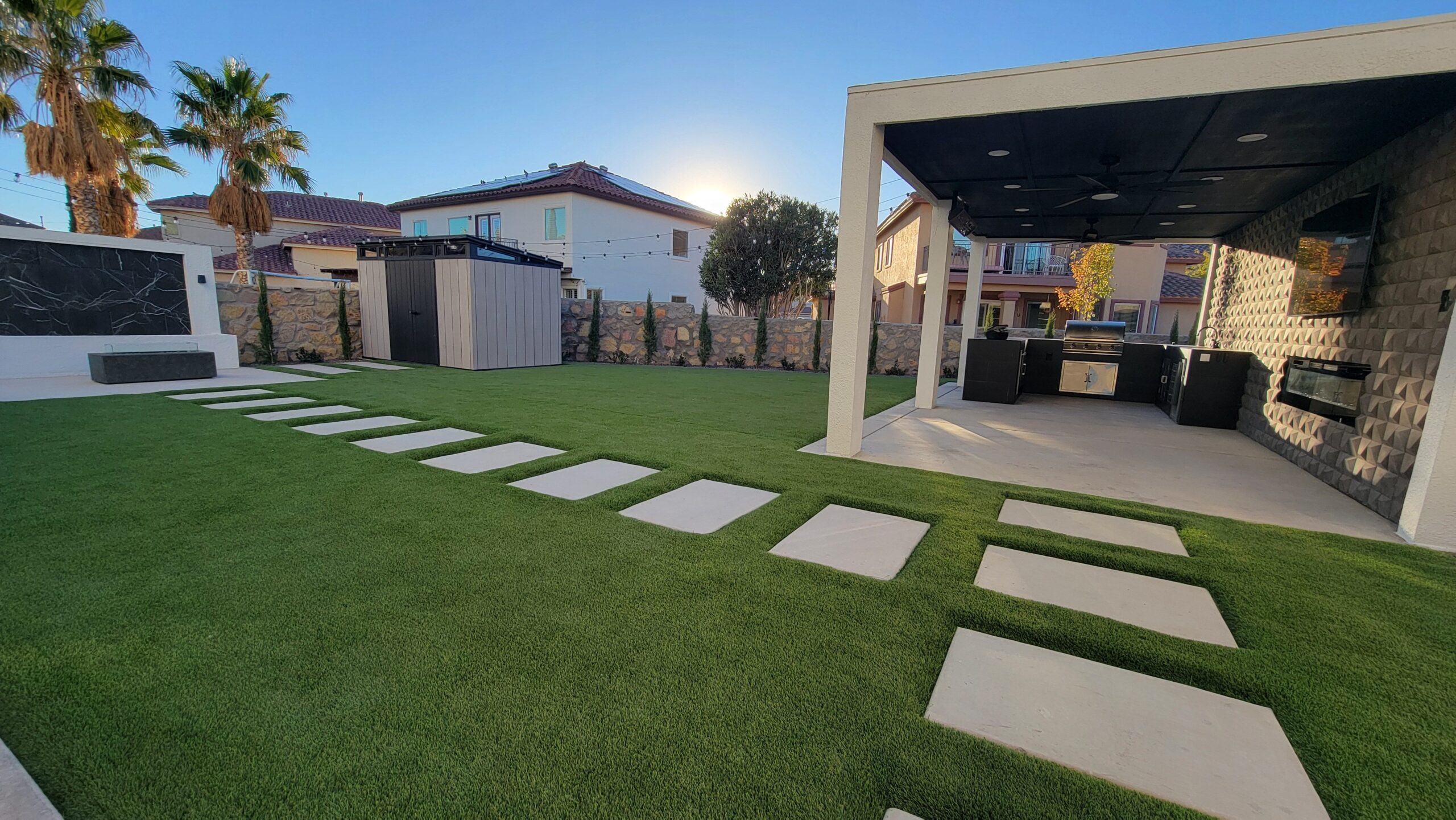
- An outdoor kitchen
- Covered patio
- Pergola
- Dining area
- Lounge seating
- Fire feature
- Landscaping
- Artificial turf
- Outdoor lighting
Planning these areas together can help prevent conflicts.
For example, leaving the outdoor kitchen until after the pool is built could result in limited space or inconvenient traffic patterns.
A complete backyard plan gives each feature a defined purpose.
Custom Pool Planning Checklist
Before moving forward with a custom pool in El Paso, review these questions:
- How will the pool primarily be used?
- How many people will normally use it?
- What size works with the backyard?
- What shape complements the home?
- What pool depth is appropriate?
- How much pool decking is needed?
- Which materials can handle outdoor exposure?
- Where will the equipment be located?
- Do you want heating?
- Which pool features will actually be used?
- Where will shaded areas be located?
- Is additional privacy needed?
- How will landscaping work around the pool?
- How will the backyard handle drainage?
- What maintenance will the pool require?
- What safety features are necessary?
- What permits or approvals are required?
- How will construction equipment access the property?
- How will the pool connect with other outdoor living areas?
Answering these questions before construction can make the design process much more efficient.
How Much Does a Custom Pool in El Paso Cost?
There is no single price for custom pool construction because every project is different.
The final cost can depend on factors such as:
- Pool size
- Pool shape
- Excavation conditions
- Interior finishes
- Decking
- Equipment
- Plumbing and electrical work
- Heating
- Lighting
- Water features
- Integrated spas
- Landscaping
- Access to the backyard
Because of these variables, comparing custom pool projects only by overall price can be misleading.
A detailed project scope provides a more useful way to understand what is included and where the budget is being allocated.
Common Mistakes to Avoid When Building a Pool
One of the biggest mistakes is focusing entirely on the pool itself.
Homeowners may select an attractive pool design only to discover that there is not enough room left for furniture, shade, landscaping, or comfortable walkways.
Other mistakes include:
- Making the pool too large for the property
- Providing too little deck space
- Ignoring shade
- Choosing materials based only on appearance
- Adding features that will rarely be used
- Forgetting equipment placement
- Failing to consider privacy
- Overlooking drainage
- Planning landscaping after construction
- Not considering future backyard improvements
Thinking about the property as one complete outdoor environment can help avoid many of these problems.
Is a Custom Pool Right for Your Backyard?
A custom pool may be a good fit if your family spends significant time outdoors and you want a backyard specifically designed around your lifestyle.
Customization allows the pool to respond to the shape of the property, existing architecture, entertainment needs, and other outdoor features.
However, homeowners should also be comfortable with the ongoing responsibilities associated with pool ownership.
Consider both the initial project and the long-term maintenance before making a decision.
Building a Custom Pool in El Paso
A successful custom pool begins with careful planning.
For El Paso homeowners, this means considering sun exposure, shade, outdoor materials, maintenance, pool equipment, landscaping, privacy, and how the entire backyard will function once construction is complete.
Rather than treating the pool as an isolated project, design it as part of a complete outdoor living space.
The right combination of pool design, decking, landscaping, lighting, shade, and entertainment areas can create a backyard that is comfortable for everyday use and ready for gatherings with family and friends.
Plan Your Custom Pool With Anson General Contracting
Building a custom pool is an opportunity to rethink how your entire backyard works.
Anson General Contracting can help homeowners in El Paso plan custom pools and outdoor spaces that coordinate with patios, decking, landscaping, pergolas, outdoor kitchens, and other backyard features.
Whether you are starting with an empty yard or incorporating a pool into an existing outdoor living area, careful planning can help create a space that feels connected, functional, and designed around your home.
Contact Anson General Contracting to discuss your custom pool project in El Paso and begin planning a backyard designed around the way you want to use it.