A small backyard can still become a comfortable, functional, and attractive outdoor living space when every area is planned with a clear purpose. Limited space does not mean you have to give up features such as seating, landscaping, shade, dining, or even a compact outdoor kitchen; the key is choosing the right layout, using materials strategically, and avoiding elements that make the yard feel crowded.
For homeowners working with a small backyard, the best design usually focuses on flexibility, efficient circulation, visual openness, and features that serve more than one purpose. A well-designed small yard can feel organized and spacious even when the available square footage is limited.
Start With a Clear Plan for the Space
Before choosing furniture, plants, or hardscape materials, decide how you want to use the backyard most often. A small space can quickly become cluttered when too many functions are added without a clear layout, so it is better to identify two or three priorities and design around them.
For example, you may want a seating area, a small dining zone, and a compact section for landscaping. Another homeowner may prefer a grill station, shade, and open space for children or pets. Defining these priorities early helps prevent the backyard from becoming a collection of disconnected features.
Divide the Backyard Into Functional Zones
Even a small backyard can benefit from having different zones, but the divisions should be subtle. Instead of adding walls or large structures, you can use changes in flooring, furniture placement, planters, lighting, or landscaping to define separate areas.
A small patio can function as the main seating area, while artificial turf or gravel creates a softer secondary zone. A narrow border of landscaping can define the edge of the property without taking up much usable space, and a compact grill or outdoor kitchen can be placed along one side so it does not interrupt circulation.
The goal is to create clear areas without making the yard feel boxed in.
Use Built-In Seating
Built-in seating is one of the most effective small backyard design ideas because it reduces the need for bulky furniture. Benches can be placed along walls, fences, planters, or the perimeter of a patio, allowing the center of the yard to remain open.
Built-in seating can also include storage underneath for cushions, outdoor accessories, or gardening supplies. This is especially useful in a limited outdoor space where every element needs to contribute more than one function.
A simple L-shaped bench in a corner can create a comfortable conversation area without using the same amount of space as multiple chairs and side tables.
Keep Furniture Proportional to the Yard
Oversized furniture can make a small backyard feel much smaller than it actually is. Instead of large sectional sofas or wide dining tables, choose compact furniture with simple lines and enough space around it for movement.
Folding chairs, narrow tables, benches, and stackable seating can work especially well because they provide flexibility when the backyard needs to serve different purposes. Furniture with exposed legs can also make the space feel lighter because more of the flooring remains visible.
The objective is not to fill the yard, but to make it comfortable without interrupting the natural flow between areas.
Choose One Main Flooring Material
Using too many flooring materials can make a small backyard look fragmented. A cleaner approach is to choose one primary surface for the main patio and use one secondary material only when needed.
Concrete, pavers, outdoor porcelain tile, or composite decking can create a strong base for the design. Artificial turf, gravel, or landscaping can then be used as a contrasting element.
Keeping the material palette simple helps create visual continuity, which can make the backyard feel larger and more cohesive.
Use Large-Format Pavers or Tiles
Large-format pavers and outdoor tiles can help create a cleaner and less busy appearance in a small backyard. Fewer grout lines or joints reduce visual clutter, especially in patios with limited dimensions.
The size of the material should still be proportional to the space, but larger units can work particularly well in modern small backyard designs.
Using the same or similar flooring near the house and into the outdoor area can also create a smoother transition between indoor and outdoor living spaces.
Take Advantage of Vertical Space
When horizontal space is limited, vertical surfaces become much more valuable. Walls and fences can support plants, lighting, storage, decorative panels, or other elements that would otherwise occupy floor space.
Vertical landscaping can include:
- Wall-mounted planters
- Trellises
- Climbing plants
- Narrow planting beds
- Decorative screens
- Hanging planters
Vertical elements can also add privacy without requiring wide hedges or large shrubs.
Using height strategically allows homeowners to add greenery and visual interest while preserving valuable ground space.
Keep Landscaping Simple
A small backyard usually benefits from a restrained landscaping plan rather than a large number of different plants. Too many varieties can make the yard feel visually crowded and increase maintenance.
Choose a limited palette of plants with different heights and textures, then repeat them throughout the space. This creates consistency and helps the landscaping feel intentional.
Narrow beds along fences or walls can add greenery without reducing the central usable area. Container plants can also provide flexibility because they can be moved or replaced as the design changes.
Use Artificial Turf Strategically
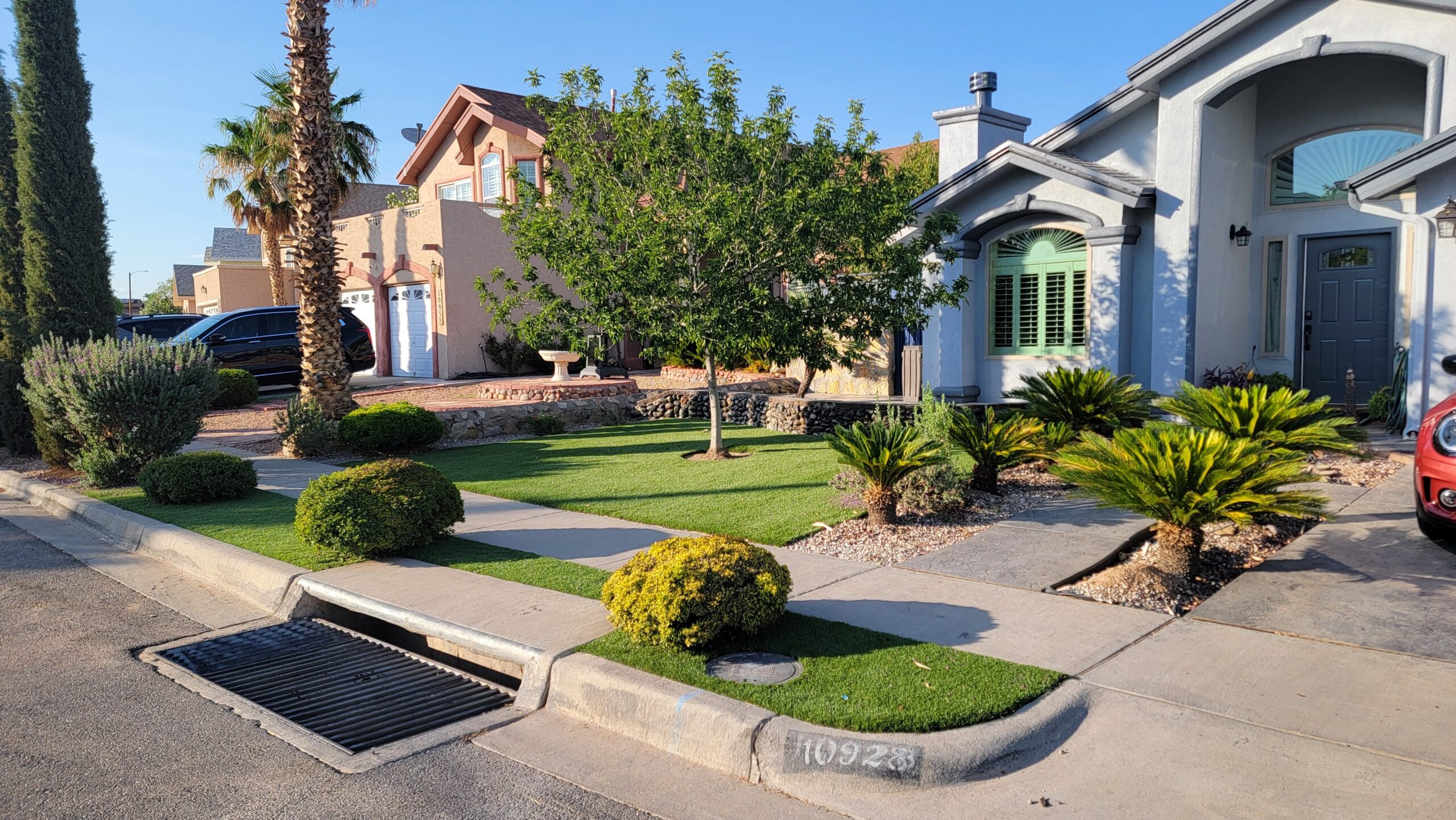
Artificial turf can be useful in a small backyard when homeowners want a green area without dedicating significant space to lawn maintenance. It works particularly well in compact zones between patios, along walkways, or in areas used for pets and casual seating.
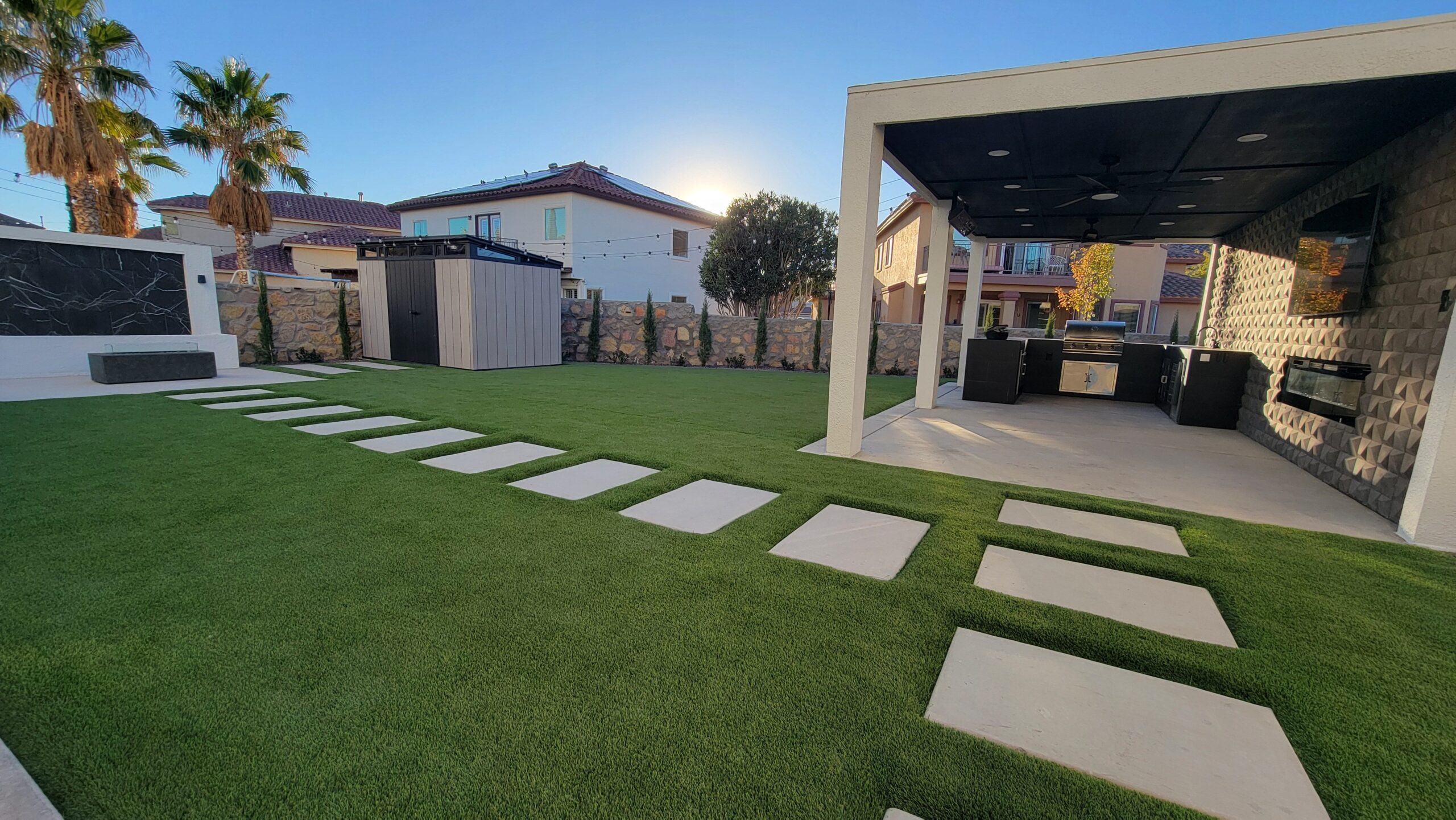
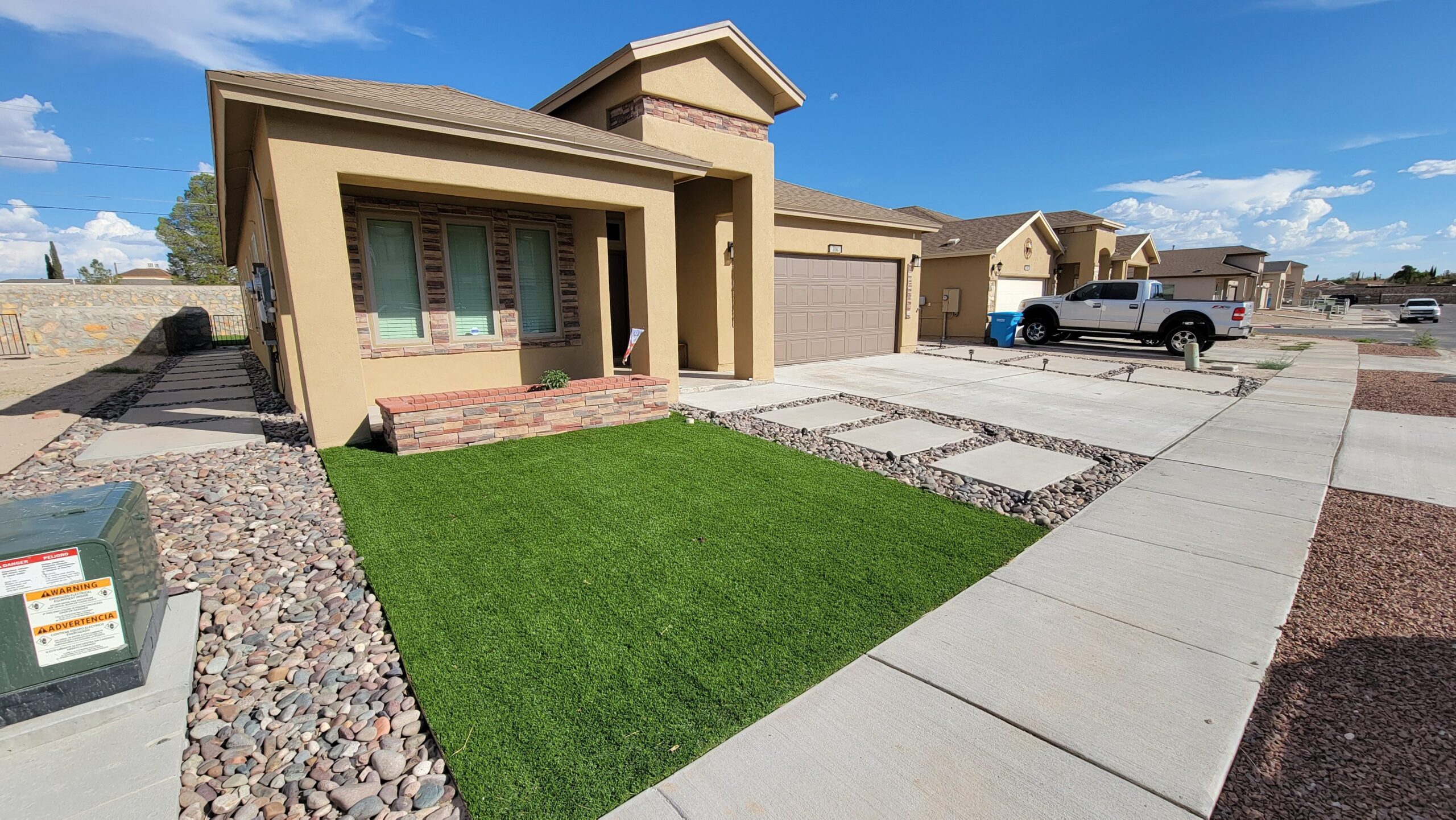
Combining artificial turf with pavers or concrete can create contrast while maintaining a clean design. For example, large stepping stones surrounded by turf can visually soften the space without requiring a full lawn.
Because artificial turf can become warm under direct sun, consider how the area will be used and whether shade is available.
Add Shade Without Overwhelming the Yard
Shade is important for making a small backyard more comfortable, but large structures can visually dominate a limited space. A pergola, compact covered patio, retractable shade system, or umbrella can provide protection from the sun without making the backyard feel enclosed.
The size and placement of the shade structure should be carefully considered. In many cases, covering only the main seating or dining area works better than covering the entire yard.
A well-proportioned pergola can also create a strong visual focal point while helping define the outdoor living area.
Consider a Small Pergola
A compact pergola can work especially well in a small backyard because its open roof allows light to pass through and prevents the space from feeling completely enclosed. It can define a seating area, dining space, or grilling zone while adding height and architectural interest.
A pergola can also support lighting, fans, or climbing plants depending on the design. When placed against the house or along one side of the yard, it can help organize the layout without taking up excessive space.
The key is keeping the structure proportional to the backyard.
Design a Compact Outdoor Kitchen
A small backyard does not automatically rule out an outdoor kitchen. The design simply needs to focus on the essentials.
A straight-line outdoor kitchen placed along a wall can include a grill, countertop, and storage without using much floor space. If more functionality is needed, a small refrigerator or side burner can be incorporated depending on the layout.
Avoid oversized islands unless the yard has enough room for comfortable circulation around them.
For small spaces, one well-planned cooking station is usually more practical than a large kitchen with multiple appliances.
Combine Dining and Preparation Space
Multi-purpose surfaces can make small outdoor areas more efficient. A counter used for food preparation can also function as bar seating or a casual dining area.
This eliminates the need for separate prep counters and dining tables.
A narrow counter with stools can be particularly useful next to an outdoor kitchen because it provides seating without taking up the same amount of space as a full dining set.
Designing features to serve multiple purposes is one of the most effective ways to maximize a small backyard.
Use Corners More Efficiently
Corners are often underused in backyard design.
A corner can accommodate an L-shaped bench, compact fire feature, small planter arrangement, or built-in grill station.
By moving larger features toward the perimeter, the center of the yard remains open and easier to navigate.
This strategy can make a rectangular or narrow backyard feel much more functional without increasing the actual size.
Keep Walkways Clear
Good circulation is especially important in a small outdoor space because even one poorly placed feature can interrupt movement.
People should be able to move comfortably between the house, seating area, gate, grill, and other parts of the backyard without squeezing around furniture or landscaping.
Avoid placing large planters, tables, or decorative elements directly in common pathways.
A simple layout with clear circulation often feels more spacious than a complicated design with more features.
Use Light Colors to Create an Open Feeling
Lighter colors can help outdoor spaces feel brighter and more open.
This does not mean every surface needs to be white, but lighter concrete, stone, tile, furniture, and finishes can reflect more light and reduce the visual weight of the design.
Darker colors can still be used as accents on fences, pergolas, furniture, or planters.
A balanced color palette can create contrast without making a small yard feel enclosed.
Use Fencing as Part of the Design
In a small backyard, the fence occupies a large portion of the visual field, so it should be treated as part of the overall design rather than simply a boundary.
A clean horizontal fence can create a modern look and visually make the yard appear wider. Lighter or medium-tone finishes may help the space feel more open, while darker fences can create contrast with landscaping and furniture.
Adding vertical plants or subtle lighting can also make the fence more attractive without taking up additional floor space.
Add Privacy Without Losing Space
Privacy is often important in small backyards because neighboring properties may be close.
Instead of using wide hedges, consider solutions that require less ground space, such as:
- Privacy screens
- Narrow fencing
- Vertical landscaping
- Trellises
- Pergola side panels
- Tall planters
These options can block specific sightlines without reducing the usable area.
Targeted privacy is often more effective than trying to completely enclose every side of the yard.
Use Lighting to Make the Space Feel Larger
Outdoor lighting can make a small backyard feel more inviting and visually deeper after sunset.
Instead of relying on one bright fixture, use several layers of lighting throughout the space. Path lights, wall lights, pergola lighting, and subtle landscape lighting can draw attention to different areas and make the yard feel more dynamic.
Lighting the perimeter of the property can also create a greater sense of depth because the eye can see the full extent of the space at night.
Consider a Small Fire Feature
A fire feature can become a focal point without requiring a large footprint.
Compact gas fire pits, built-in fire tables, or wall-mounted fire features can work well in smaller outdoor living spaces when they are planned with appropriate clearances and seating.
Instead of placing a large fire pit in the center of the yard, consider positioning it near built-in seating or along one side of the patio.
This can create a gathering area while preserving more open floor space.
Use Mirrors and Reflective Surfaces Carefully
Reflective surfaces can add depth to a small outdoor space when used thoughtfully.
Outdoor-rated mirrors or reflective decorative elements can help bounce light around narrow patios or enclosed areas.
However, placement should be carefully considered to avoid unwanted glare or reflections.
This technique works best as a subtle design element rather than the main feature of the backyard.
Create a Focal Point
Small backyards often feel more organized when there is one clear focal point.
This could be a pergola, fire feature, small fountain, outdoor kitchen, statement planter, or attractive seating area.
Without a focal point, the eye may jump between too many small elements, making the yard feel cluttered.
Choose one feature to anchor the design and keep the surrounding elements simpler.
Avoid Overdecorating
One of the easiest ways to make a small backyard feel crowded is to add too many decorative objects.
Multiple planters, signs, lanterns, sculptures, and furniture pieces can quickly reduce the visual simplicity of the space.
Instead, choose a few larger and more intentional elements.
A clean backyard design often feels more spacious and sophisticated than one filled with many small accessories.
Small Backyard Design Ideas for Narrow Yards
Narrow backyards require a slightly different approach because circulation becomes the main challenge.
Place furniture, landscaping, and larger features along the edges instead of the center. Long horizontal lines in flooring, fencing, or built-in seating can reinforce the length of the yard.
A linear patio layout with a compact seating area at one end and landscaping along the perimeter can make the space feel organized without blocking movement.
Avoid placing large square furniture arrangements in the middle of a narrow backyard.
Small Backyard Ideas With a Pool
A pool can still work in a limited backyard when the dimensions and surrounding space are carefully planned.
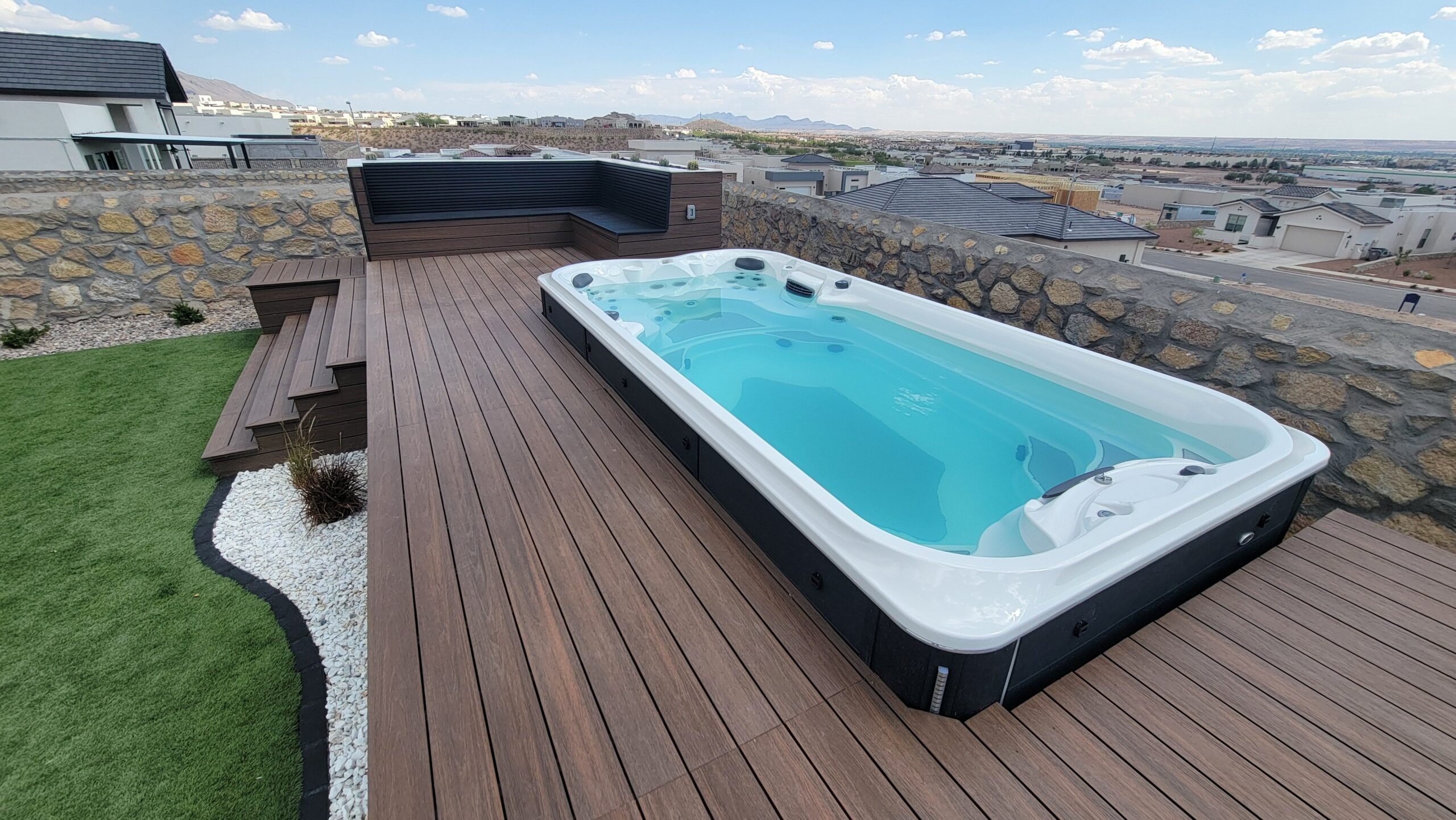
Compact pools, plunge pools, and smaller custom designs can leave enough room for decking and seating while providing a strong focal point.
The pool should not consume the entire yard.
Think about how much deck space is needed for walking, furniture, and access to other outdoor features.
In many small backyard designs, a smaller pool with better surrounding space is more practical than the largest pool that can physically fit.
Small Backyard Landscaping Ideas
Landscaping should add softness and privacy without making the yard difficult to maintain.
Use narrow planting beds, vertical greenery, and strategically placed containers rather than large garden areas.
Choose plants based on mature size so they do not outgrow the available space.
Repeating the same few plant varieties can create a cleaner appearance and make a small landscape feel more intentional.
Small Backyard Design Checklist
Before starting a small backyard remodeling project, consider:
- What are the two or three most important uses for the space?
- How much seating is actually needed?
- Can any features serve more than one purpose?
- Which areas receive the most sunlight?
- Where is shade needed?
- Can landscaping be moved to the perimeter?
- Would built-in seating save space?
- Is there enough room for comfortable walkways?
- Can vertical surfaces be used for plants or storage?
- Which flooring material will make the space feel cohesive?
- Is privacy needed in specific areas?
- Where should lighting be installed?
- Are any features unnecessarily large?
- Does the design leave some open space?
A successful small backyard should feel comfortable and intentional rather than completely filled.
Common Small Backyard Design Mistakes
One common mistake is trying to include every possible backyard feature in a limited area. A pool, outdoor kitchen, dining table, lounge area, fire pit, large garden, and multiple decorative features may all be appealing individually, but together they can make a small yard difficult to use.
Another mistake is using furniture and structures that are too large for the property. Oversized pergolas, sectional sofas, or wide islands can dominate the space and restrict circulation.
Other common problems include using too many flooring materials, choosing plants that become too large, blocking natural pathways, and placing features without considering how people will move between them.
How to Make a Small Backyard Look Bigger
The simplest way to make a small backyard look larger is to reduce visual clutter and create clear lines through the space.
Use a limited material palette, keep furniture proportional, place landscaping around the edges, and avoid unnecessary barriers.
Repeating colors and materials throughout the design can also create continuity.
Vertical landscaping and lighting can draw the eye upward, while visible flooring and open pathways make the yard feel less crowded.
The goal is to create a sense of depth and organization rather than trying to hide the actual dimensions.
Small Backyard Design in El Paso
Small backyard design in El Paso should also take sun exposure, heat, shade, and maintenance into account.
An attractive layout may not be comfortable if there is no shaded area during the hottest parts of the day.
Materials should be selected for outdoor exposure, while landscaping should fit the available space and maintenance expectations.
Combining durable hardscape with carefully placed greenery can create an outdoor space that feels polished without requiring a large yard.
Make Every Part of Your Backyard Work Harder
The best small backyard ideas focus on efficiency rather than the number of features.
A built-in bench can provide seating and storage, a pergola can create shade and define the main gathering area, a narrow counter can serve as both preparation and dining space, and vertical landscaping can add greenery without taking up valuable floor space.
When each element has a clear purpose, even a limited backyard can support cooking, relaxing, entertaining, and spending time outdoors.
Plan Your Small Backyard With Anson General Contracting
A small backyard does not have to feel restrictive. With careful planning, the right materials, and a layout designed around the way you use your home, limited outdoor space can become one of the most functional areas of the property.
Anson General Contracting can help homeowners in El Paso plan small backyard renovations that incorporate patios, flooring, pergolas, landscaping, outdoor kitchens, pools, fencing, and other outdoor living features without overwhelming the available space.
Contact Anson General Contracting to discuss your small backyard design and explore ways to make better use of every part of your outdoor space.